Why the World's Healthiest People Train
When most people think about martial arts, they think about fighting. What they don't think about — but what practitioners know from experience — is that martial arts training is one of the most comprehensive wellness practices available.
It's physical conditioning and stress relief. It's community and mental discipline. It's moving meditation and character development. A practice that serves you across your entire lifespan in ways that most forms of exercise simply don't.
At Wellness World Media, the martial arts dimension of health and performance is a core thread through our content and contributor network. This article explores the evidence for why martial arts training belongs in any serious conversation about holistic wellness — and how you can access the best of this tradition regardless of where you are in your journey.
The Physical Benefits Are Just the Beginning
The physical benefits of regular martial arts training are well-documented and cover a broad range of fitness dimensions that most single-sport activities don't address comprehensively.
Cardiovascular conditioning: depending on the style and intensity, martial arts training can produce significant improvements in cardiovascular fitness comparable to interval training — with the advantage that the varied, engaging nature of training makes the duration and intensity more sustainable than equivalent gym-based cardio.
Strength and power: most martial arts styles develop full-body functional strength — the kind that serves you in real life. The emphasis on generating power through coordinated, whole-body movement patterns produces strength with practical application.
Flexibility and mobility: styles like Karate, Taekwondo, and various kung fu disciplines place significant demands on hip, shoulder, and spinal mobility, producing substantial flexibility gains when practiced consistently.
Balance and proprioception: the constant demand for weight control, positioning, and precise movement inherent in martial arts training develops the neuromuscular coordination that is critically important for fall prevention in older adults and performance in every physical activity.
The Mental and Psychological Dimension
The mental health benefits of martial arts training are one of the most consistently reported outcomes across both research and practitioner experience.
Anxiety and stress management: the physical intensity of training produces the cortisol-clearing effect of vigorous exercise while simultaneously requiring a mental presence that effectively interrupts rumination cycles. Many practitioners describe training as the period of their week when they are most fully present and least mentally encumbered by daily stressors.
Confidence and self-efficacy: there is something uniquely powerful about developing genuine physical capability. The confidence that comes from knowing you can handle physical challenge transfers broadly to other domains of life. Research on youth martial arts programs consistently shows improvements in confidence, academic performance, and behavioural self-regulation that extend well beyond the training context.
Resilience: martial arts training normalises difficulty and teaches practitioners to continue functioning effectively under physical and mental pressure. This developed tolerance for challenge — built through years of pushing through difficult training sessions and recovering from setbacks — is a genuinely transferable life skill.
Martial Arts as a Spiritual and Philosophical Path
This is the dimension of martial arts that tends to be least understood in mainstream wellness discussions, and it's also one of the most significant.
Virtually every traditional martial arts system has embedded within it a philosophical and ethical framework — a set of values and principles for living that extend far beyond combat technique. Respect, humility, perseverance, self-discipline, service to others, the cultivation of inner calm — these are not peripheral features of the tradition; they're central to what the tradition is for.
This philosophical dimension is why so many practitioners stay involved with martial arts across their entire lives, long after they've achieved whatever technical goals originally drew them in. The practice becomes a vehicle for ongoing personal development — a structured context for continuing to work on the most important dimensions of character.
The concept of mushin — "no mind" — in Japanese martial arts refers to a state of mental clarity and presence in which action arises without conscious deliberation. Many practitioners across many styles describe a deepening of their sense of presence and inner quiet that they attribute directly to years of consistent practice. This is part of why we treat martial arts as a legitimate and important component of holistic wellness at Wellness World Media.
The Social and Community Dimension
Human beings are profoundly social creatures, and the quality of our social connections is one of the strongest predictors of health, wellbeing, and longevity in the research literature. The Harvard Study of Adult Development, spanning more than 80 years, found that the quality of close relationships was a stronger predictor of health and happiness in later life than any other measured factor.
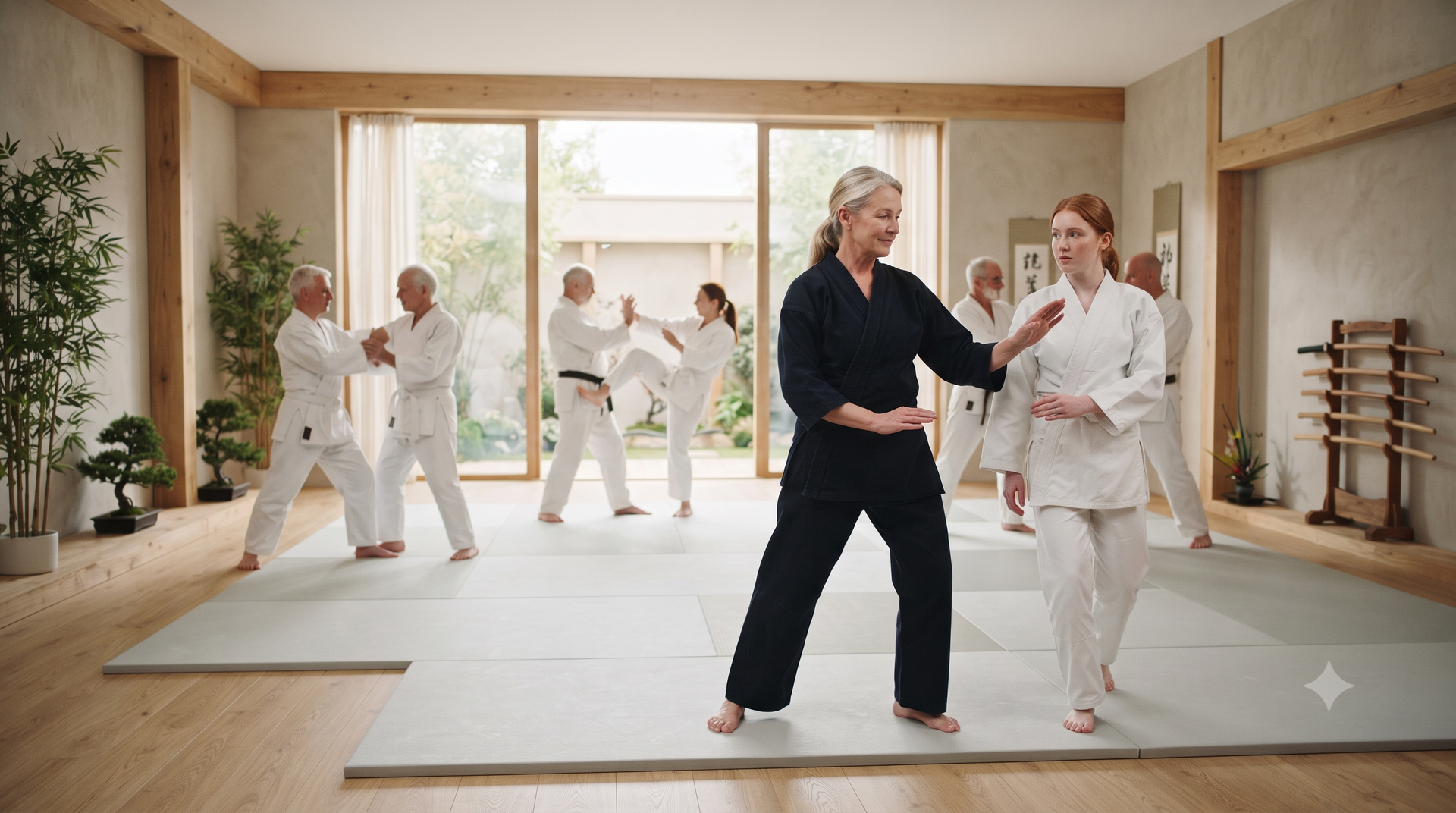
Martial arts training creates unusually strong social bonds. The shared experience of physical challenge, the trust required in partner work, the mutual respect that develops through years of training together — these produce friendships of genuine depth and durability. The dojo or training hall becomes a genuine community in ways that most modern social contexts struggle to replicate.
For children and adolescents, the social environment of a martial arts school provides something increasingly rare: a structured, adult-supervised community of practice with explicit values, clear expectations, and positive peer relationships. The consistent evidence for positive behavioural and social outcomes in children who train martial arts reflects, at least partly, the quality of this community environment.
Our Martial Arts Contributors
Our contributor network includes some of the most legendary figures in martial arts history. Mike Stone — the undefeated Karate champion and martial arts pioneer — brings a lifetime of experience and wisdom to our platform. Paul Mracek, international author and master trainer, shares the philosophical and practical depth of the tradition. Ian Jacobs, triple world champion and founder of ThundaBall, brings the high-performance and motivational dimension.
These aren't theoretical contributors — they're practitioners who have lived the tradition across decades and understand it from the inside. Their insights, published through Wellness World Media, represent the kind of genuine expertise that's increasingly rare in a content landscape dominated by surface-level wellness commentary.
Share Articles and Blogs
Recent Articles and Blogs