WIM HOF
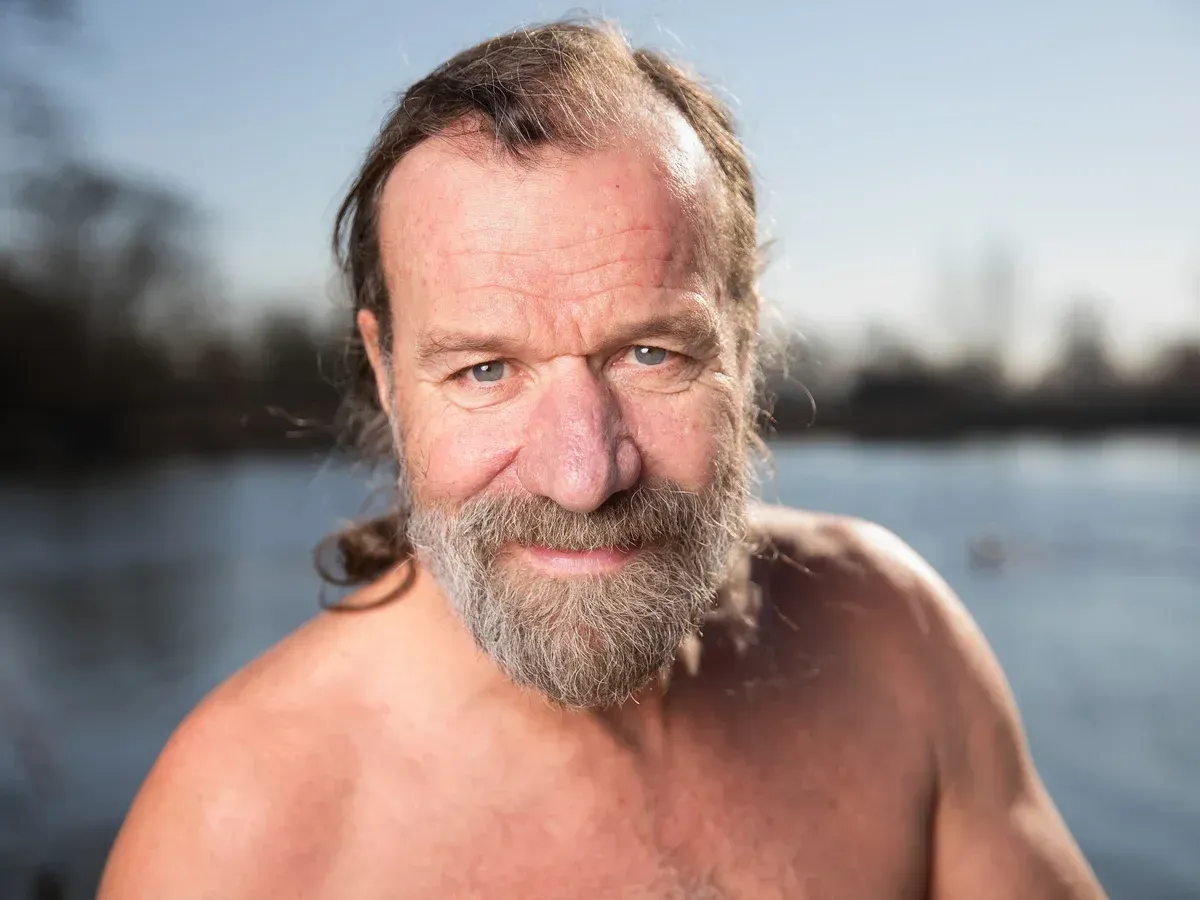
Wim Hof, widely known as
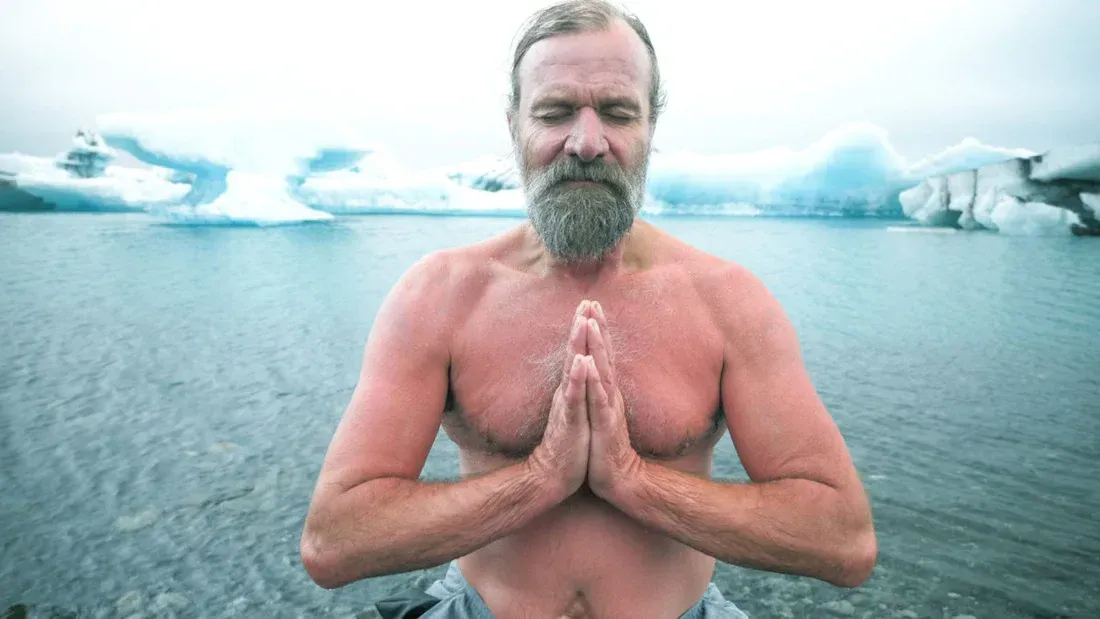
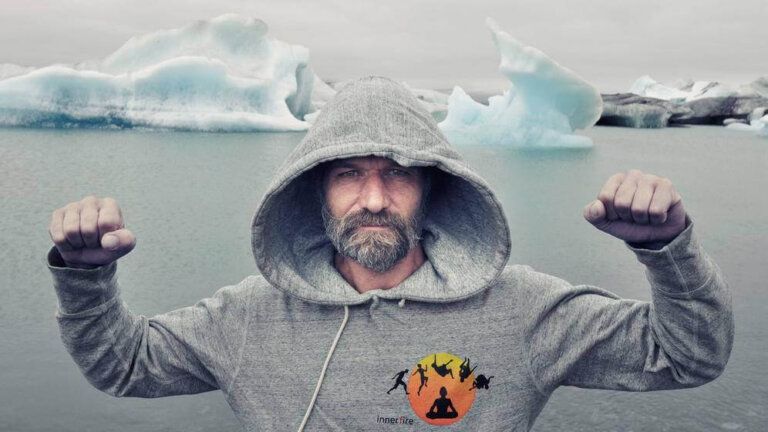
"The Iceman," is a Dutch extreme athlete and motivational speaker who has gained global recognition for his ability to withstand freezing temperatures. He attributes his physiological feats to the
Wim Hof Method (WHM), a practice he developed to help people reconnect with their inner potential and natural resilience.
The Three Pillars of the Wim Hof Method
His philosophy is centered on the belief that modern lifestyles have disconnected us from our natural survival mechanisms. He stands for the idea that "What I am capable of, everybody can learn." The method consists of three core components:
- Breathing: Specialized techniques involving cycles of deep, rhythmic inhalations followed by breath retention to influence the body’s biochemistry and nervous system.
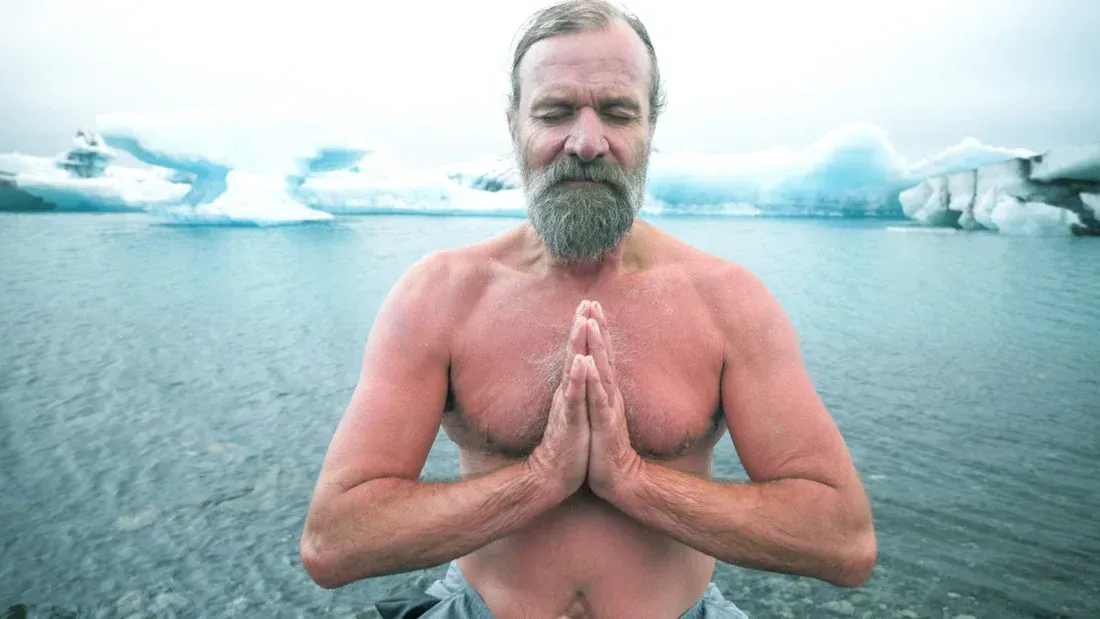
- Cold Exposure: Gradual adaptation to the cold through activities like cold showers and ice baths to improve cardiovascular health and reduce inflammation.
- Commitment: The mental focus and determination required to master the physical practices and maintain consistency.
Major World Records & Achievements
Wim Hof has claimed to set 26 world records over his career, many of which involve extreme endurance and cold resistance. While some have since been surpassed, his most notable achievements include:
Longest Ice Bath
Held the record for full-body contact with ice for 1 hour and 53 minutes.
Arctic Marathon
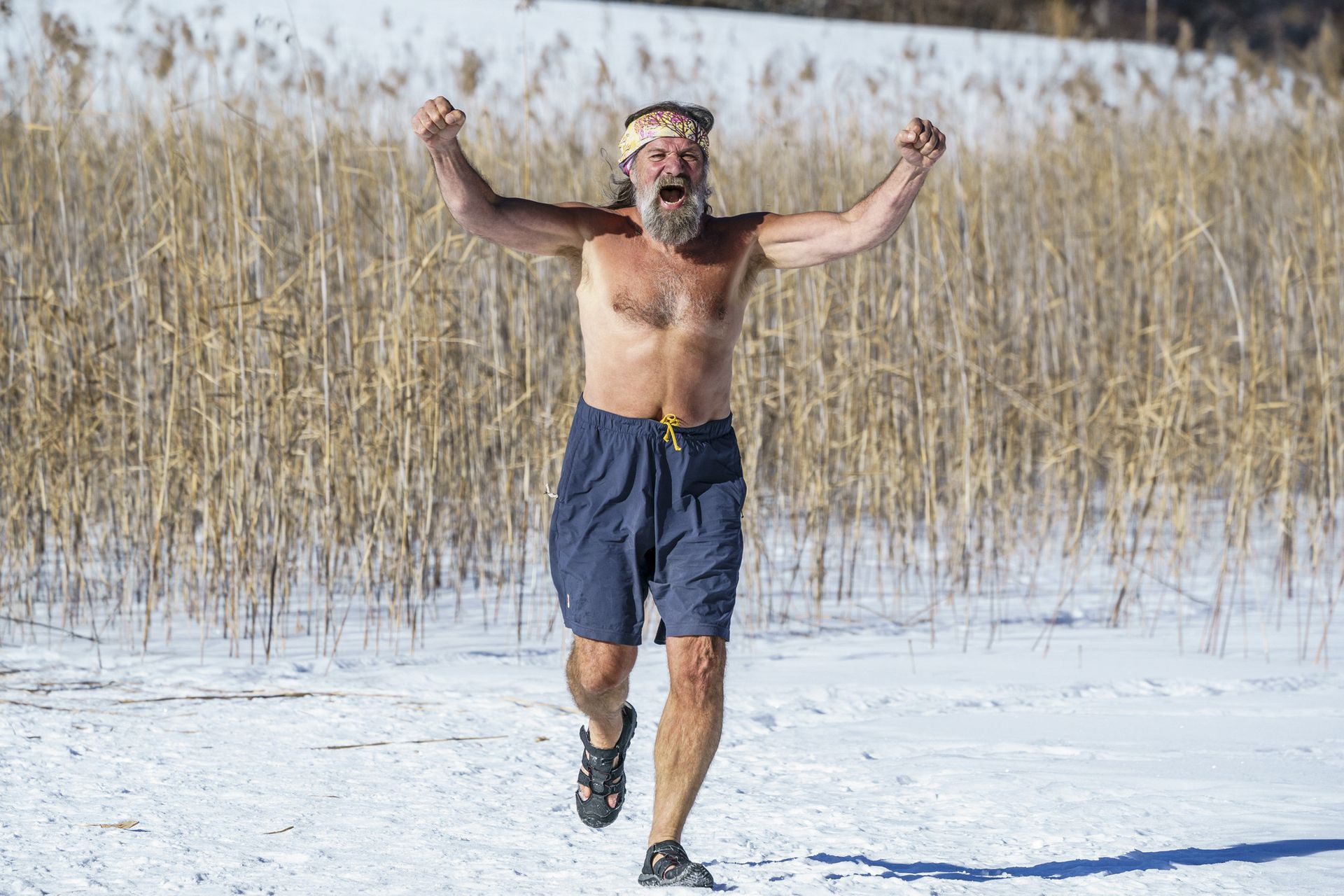
Ran a half-marathon above the Arctic Circle barefoot, wearing only shorts.
Desert Marathon
Completed a full marathon in the Namib Desert without drinking any water.
Altitude Climbing
Reached 7,400 meters on Mount Everest wearing only shorts and shoes (aborted due to a recurring foot injury).
Ice Swimming
Set records for the farthest swim under ice while holding his breath (no fins or diving suit).
What He Stands For
What He Stands For
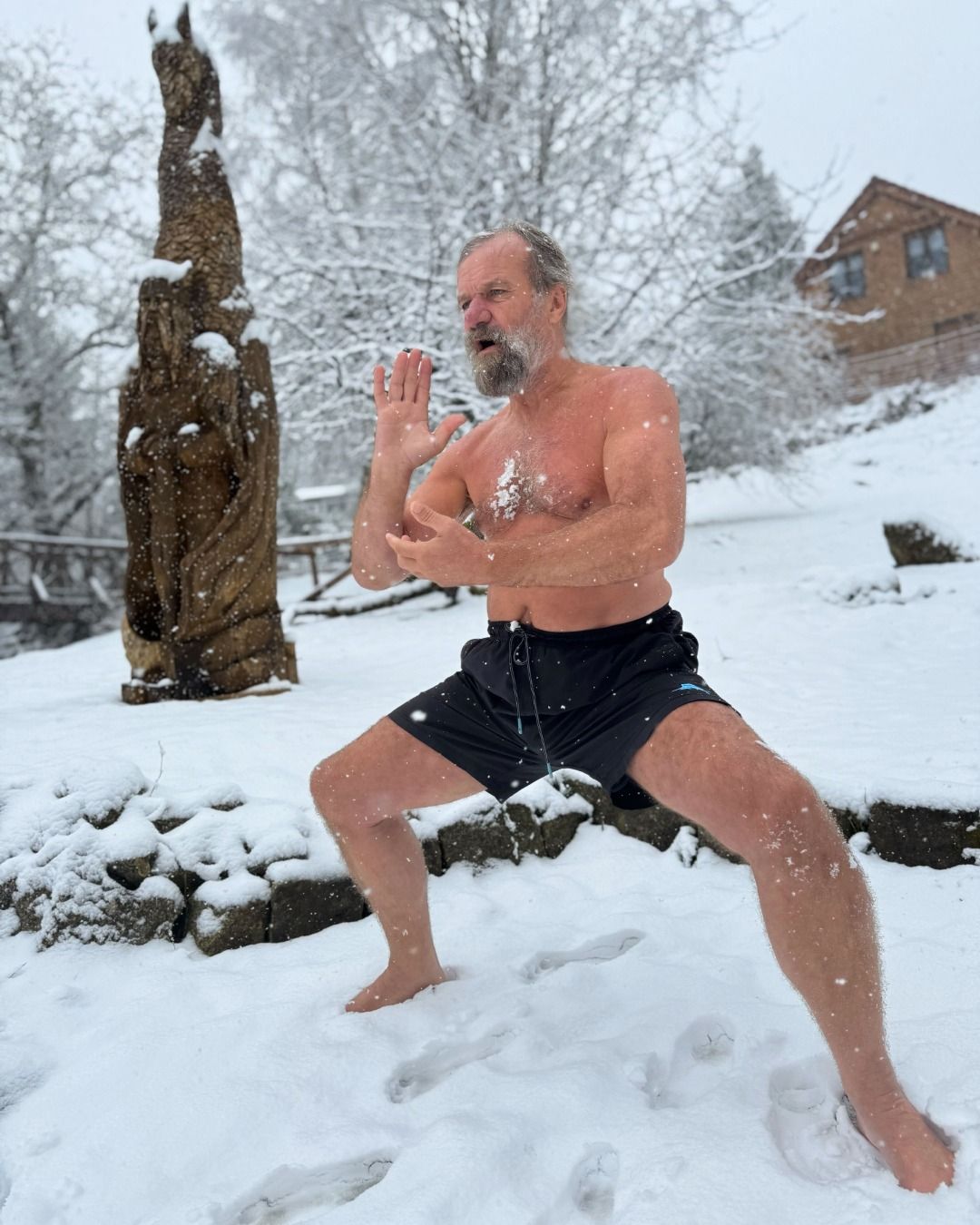
Beyond the physical records, Wim Hof's mission is largely focused on scientific advocacy and mental empowerment. He has collaborated with researchers at institutions like Radboud University to prove that humans can wilfully influence their autonomic nervous system and immune response—functions previously thought to be involuntary.
His primary message is one of biological freedom: he believes his techniques can help individuals manage stress, boost energy, and even mitigate symptoms of certain health conditions by mastering the "mind-body connection."
Safety Note
As of 2026, experts and Wim Hof himself emphasize that his breathing techniques should never be practiced in water or while driving, as they can cause light-headedness or loss of consciousness.
Wim Hof is widely credited with 26 world records (many of which are Guinness World Records). While some of his endurance records have since been surpassed by others using his techniques, his body of work remains the benchmark for human physiological limits.
The "Iceman" Record Book
Full-Body Ice Contact
Stayed submerged in ice up to his neck for 1 hour, 53 minutes, and 2 seconds. (He broke this specific record 15 times over his career).
The Arctic Half-Marathon
Ran a half-marathon (21km) above the Arctic Circle (Finland) barefoot wearing only shorts. Time: 2 hours, 16 minutes.
Under-Ice Swim
Swam 66 meters (216.5 feet) under a solid sheet of ice on a single breath.
High Altitude (Everest)
Climbed to 7,400 meters (24,278 feet) on Mount Everest wearing nothing but shorts and shoes.
High Altitude (Kilimanjaro)
Scaled Mt. Kilimanjaro in just 28 hours wearing only shorts (typical climbs take 5–7 days).
Desert Marathon
Completed a full marathon (42km) in the Namib Desert in temperatures up to 40°C (104°F) without drinking a single drop of water.
Hanging Endurance
Hung from a bar between two hot air balloons at 2,000 meters (6,560 feet) using only his middle finger.
The "Scientific" Record
This is paragraph text. Click it or hit the Manage Text button to change the font, color, size, format, and more. To set up site-wide paragraph and title styles, go to Site Theme.
Perhaps his most significant "record" isn't in a book, but in a lab. In 2011, at Radboud University, Wim Hof became the first person scientifically proven to voluntarily influence his autonomic nervous system and innate immune response.
By using his breathing technique, he was able to suppress the body's inflammatory response after being injected with an endotoxin—something previously thought to be biologically impossible for humans.
What He Stands For
- The Power of the Mind: He advocates that the mind is the "master" of the body, and through cold and breath, we can unlock "superhuman" traits like stress resilience and immune control.
- Environmental Conditioning: He believes humans have become "soft" and sick because we live in temperature-controlled environments. He stands for returning to "cold, hard nature" to stay healthy.
- Healing Trauma: Much of his drive comes from a personal tragedy—the loss of his wife to suicide in 1995. He stands for using these techniques to combat depression, anxiety, and PTSD.
- Democratizing Health: His mantra is "What I can do, anyone can learn." He wants to move healthcare away from a "pill for every ill" and toward self-mastery.
ARTICLE
TEACHING BEYOND WORDS
Spiritual Intelligence: Teaching Beyond Words
After decades of walking the path, you come to understand one essential truth: proper communication goes far beyond words. Words can be helpful, yes, but in the pursuit of mastery, they are often the last to matter.
The body already knows. The spirit is listening. The intuition is leading.
A true teacher doesn't just speak to a student; they feel them. You must learn to sense where their understanding truly lies, not from what they say, but in how they move, how they react, and how they absorb the energy in any given moment.
This is because everyone receives truth differently. Some learn best through hearing, absorbing the rhythm and cadence of instruction.
Others need to think it through, to analyze and connect each movement to a logical structure. Still others must feel it, through emotion, through instinct, through the unspoken resonance of the lesson. There are those who must experience it, physically. They need to feel the force of a technique.
The Two Guardians: Instinct and Intuition
To walk this path, you must awaken the two guardians that already reside within you - Instinct and Intuition. Instinct is the body's first guardian. It is the body's natural language. Before the mind can even form a sentence, the body has already responded. In sparring, in conflict, or in moments of real life danger, instinct is what protects. It reacts, it anticipates, it adjusts. You don't think about getting out of the way, you just move.
This is not learned. This is awakened.
Martial training does not give you instinct, it refines it. It strips away the hesitation, the doubt, and the mental clutter. It sharpens your natural capacity to sense danger, respond to subtle shifts in energy, and act without delay. This is why this practice is more than technique. It is the cultivation of pure
awareness. Presence. Readiness.
Intuition is the soul's inner compass. If instinct is the body's guardian, intuition is the soul's guide. In teaching, you will see students suddenly "get it" before they could ever explain how or why. A movement flows through them with a natural grace.
A complex pattern clicks into place. A correction lands not in their ears, but deep in their body. That is intuition at work, when something feels right at a level deeper than conscious thought.
As a mentor, you learn to rely on this every day. You don't follow a rigid method. You learn to read the room. You tune in to the subtle energy of each student. You let the lesson reveal itself, not just through a set curriculum, but through a living connection.
Intuition allows us to see beyond what is visible. To hear what isn’t being said. To feel where the real teaching truly needs to happen.
The Temple of Knowing
The dojo, the mat, the place of practice, this is not just a room. It is not a gym. It is a temple of awareness.
In this sacred space, we are not learning combat; we are relearning how to trust ourselves. We learn how to connect our raw instinct with disciplined action. We refine our intuition through repetition, but also through stillness.
In this space, communication becomes a holistic experience. Words may be spoken, but the real teaching occurs through the rhythm of breath, the quality of presence, and the subtle energy shifts in posture and gaze. The lesson happens in the
pause before a strike. It happens in the sincerity of the bow. It happens in the silence between techniques.
This is a spiritual language, a language of respect, awareness, and internal mastery.
This is where you learn to return to your own inner authority. Too many people in this world have abandoned their inner knowing in favour of someone else's definition of truth.
As a martial artist, you learn quickly: what you know in your body, in your gut, in your spirit, is your truth.
Spiritual intelligence is not mystical fluff. It is the highest form of embodied awareness. It’s trusting what your senses tell you long before your intellect has time to catch up. It’s honouring your instincts, cultivating your intuition, and allowing experience to be your most outstanding teacher.
Words matter, yes certainly, but they only matter when they are backed by a lived, embodied truth. What we pass on to others is not just what we say, but how we move, how we carry ourselves, and who we are in every single moment.
The Essential Truth: Remembering Who You Are
This brings us to the great misconception of our journey. We are often taught that life is a school, a place where we are sent to learn life's lessons.
We are told that if we do not learn from our mistakes, our limited thinking, and our harmful habits, we are doomed to repeat them.
This is a noble idea, but it is not the essential truth. The truth is that there is nothing to learn, your soul already knows everything.
You are here not to acquire knowledge, but to remember it. You are here to experience who you are not, and from those very experiences, decide who you truly desire to be.
Through countless opportunities to choose what is not aligned with your true self, you are given a chance to remember who you indeed are: love and light.
This is not a passive journey. Every time you choose an aspect of yourself that does not resonate with your true nature, be it fear, anger, or doubt, you gain insight.
You are given a sharper contrast, a deeper understanding of your spiritual essence.
Your thoughts, your words, your expressions, and your actions are sacred. They are the tools by which you create your reality.
When you finally recognize who you are, your choices gain a profound meaning and purpose. Your life, your practice, and your every interaction become an act of service.
You are here to embody and share the love and light of your spiritual creation. By demonstrating this, by living this truth, you illuminate the path for others who are lost in the darkness, helping them, in turn, discover their own inner light. The following five exercises are a practical means to develop
and use this philosophy in daily life and the more you use it, the more aware of your abilities.
1. "The Language Beyond Words"
Practice: The Partner Sensitivity Drill
This exercise is designed to bypass verbal analysis and teach you to listen with your body.
- How to do it: Stand facing a partner in a relaxed, natural stance. One person (the "Receiver") closes their eyes. The other (the "Giver") places a hand very lightly on the Receiver's shoulder or upper back.
- The Giver's job is to think about a direction (a gentle push, a slight pull, a guide to the left) for a full three seconds before applying any physical pressure The Receiver's job is to quiet their mind and feel the intention from the Giver, the subtle shift in energy, the change in weight, the electrical "charge" that precedes the motion.
- After a moment, the Giver applies the gentle pressure.
Switch roles. This drill trains you to sense what isn't being said and to feel the "language beyond words
2. "The Two Guardians: Instinct"
Practice: The 'Soft Eyes' Scan (Awakening Instinct)
Instinct is sharpened by moving from "hard focus" to "total awareness." This is a classic martial concept often called Zanshin (remaining mind).
- How to do it: Stand or sit comfortably. Instead of focusing your eyes intensely on a single point (like reading this text), "soften" your gaze.
- Allow your peripheral vision to expand. Your goal is not to look at everything in the room, but to sense everything.
- Become aware of the furthest points to your left and right, and the floor and ceiling, all at the same time, without moving your eyes
- Notice subtle movements, shifts in light, or changes in the "feel" of the room. This is your Instinct in its ready state, calm, expansive, and prepared, not tense and narrow.
Practice this for 60 seconds.
3. "The Two Guardians: Intuition"
Practice: Intuitive Stillness (Honoring Intuition)
Intuition is the soul's guide, but it whispers. It cannot be heard over the noise of the conscious mind. This practice creates the silence for it to be heard.
- How to do it: At the end of a workout, a practice session, or a long day, sit in seiza (formal kneeling) or cross-legged. This is often called Mokuso (quiet contemplation).
- Close your eyes. First, simply observe the rhythm of your own breath (Kokyu). Don't try to change it; just notice it.
- After a minute, let go of the breath. Your only job is to sit in the stillness. Do not search for answers. Do not ask your intuition questions.
Your task is to simply create the empty space. By honoring the silence, you give your intuition the room it needs to "land" in your body, just as the article says. Do this for 2-3 minutes
4. "The Temple of Knowing"
Practice: The Threshold Bow (Creating Sacred Space)
This transforms a simple action into a powerful mindset ritual, turning any space into a "Temple of Knowing."
- How to do it: Every time you step onto your mat, into your gym, or even into your home office to do "deep work," pause at the threshold.
- Bring your feet together. Perform a deliberate, standing bow (Ritsurei). This bow is not for anyone else. It is a physical declaration to yourself. You are saying: "I am leaving the outside world behind. I am here, now. I am present. I am open. I am ready to trust what I feel."
- This simple act clears your mental clutter and respects the "sincerity of the bow," instantly connecting you to your purpose.
5. "The Essential Truth: Remembering Who You Are"
Practice: The 'Hara' Affirmation (The Act of Remembering)
This practice shifts your energy from a state of "learning" (implying lack) to "remembering" (implying wholeness).
- How to do it: Stand in a stable stance. Place one hand over your heart. Place your other hand over your hara (your center of gravity, about two inches below your navel).
- Close your eyes and breathe deeply into your hara.
- State aloud (or just in your mind, but with full intention): "I am not here to learn. I am here to remember.’
- Feel the vibration of that statement in your center and in your heart. This is a verbal ritual that uses your own voice as a tool to realign your thoughts with your "inner authority" and "spiritual essence."
Course Promotions Area
Book the perfect summer vacation for you and your family. With heated pools, a wave pool, basketball courts and more, you'll never run out of things to do. Just make sure to reserve your spots now - so we don't run out of room.