Energy, Spirituality, and Why Open-Minded Scepticism Is the Right Stance
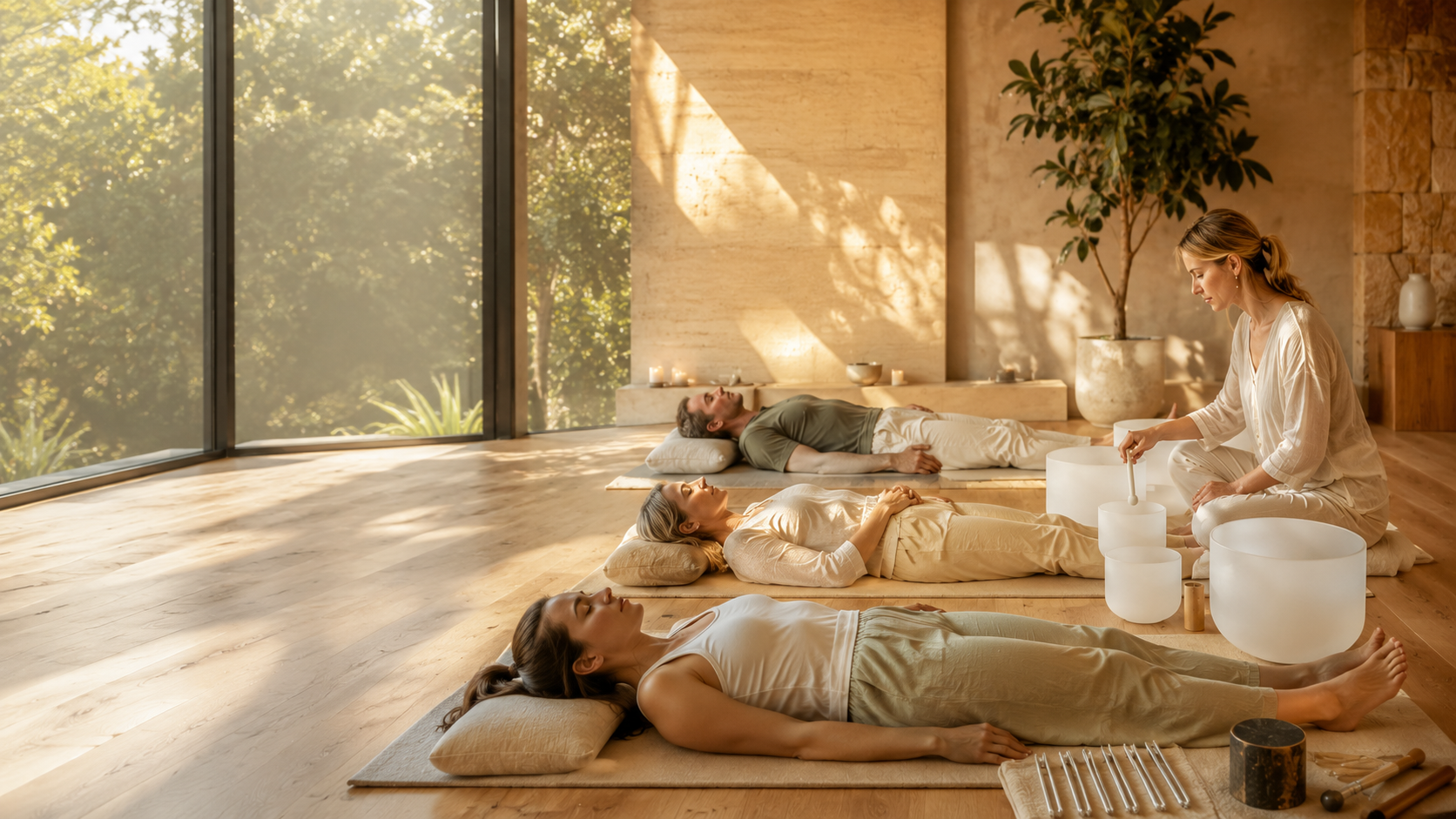
Few areas of wellness generate more controversy than those loosely categorised as "new age" — energy healing, astrology, crystal therapy, chakra work, sound healing, consciousness exploration. These practices have exploded in mainstream cultural visibility over the past decade, while simultaneously attracting dismissal from many in the scientific and medical communities.
At Wellness World Media, we've deliberately made a decision to engage with this territory. Not uncritically — we're not interested in promoting practices without meaningful evidence or with evidence of harm. But with genuine openness and discernment, because we believe that reflexive scepticism is as intellectually limited as uncritical acceptance.
This article is our honest attempt to navigate this territory — to give you a framework for engaging with new age wellness practices that is both genuinely open and genuinely rigorous.
What We Actually Know and Don't Know
The honest starting point is acknowledging the limits of current scientific understanding. Modern science is extraordinary in its explanatory power and its ability to produce reliable technological applications. It has, however, a relatively short track record and significant methodological limitations when it comes to subtle, complex, and subjective phenomena.
Many of the claims made in new age wellness contexts are genuinely beyond what current scientific methods can assess effectively. This is different from saying they've been tested and found to be false — in most cases, they haven't been tested in ways that would constitute scientific evidence. The absence of scientific evidence is not the same as evidence of absence.
This doesn't mean everything should be accepted. Some new age claims are demonstrably implausible, contradict well-established science, or have been specifically tested and failed. Others describe phenomena that are real but explained differently by conventional science. The intellectually honest position is to engage with each specific practice on its own merits — neither accepting all new age claims because wellness needs to be "open-minded," nor dismissing them all because mainstream science hasn't yet validated them.
Sound Healing and Frequency Work
Sound and vibration have documented physiological effects, and the therapeutic use of sound has traditions across virtually every culture in human history — Tibetan singing bowls, indigenous drumming, Gregorian chant, overtone singing, and many others.
The conventional science of sound's physiological effects is well-established: sound waves produce physical vibration that can affect cellular structures, and different frequencies have measurable effects on brainwave states. The relaxation response — activation of the parasympathetic nervous system — produced by certain types of music and sound is measurable and reliable.
Whether sound healing produces effects beyond relaxation and brainwave entrainment is a more open question. Proponents of specific approaches like Tibetan singing bowl therapy claim benefits for inflammation, cellular repair, and pain — but the evidence base for these specific claims is much thinner than for the general relaxation effects.
For practical purposes: sound and music can be genuinely therapeutic for stress management, anxiety, mood, and relaxation. If you find specific sound healing practices beneficial, the physiological mechanisms for at least some of those benefits are real. The more specific the claims, the more scepticism is warranted.
Energy Healing: What's Real and What's Not
Energy healing modalities — Reiki, therapeutic touch, pranic healing, and numerous others — share the framework of a practitioner working with an energy field that affects the client's health and wellbeing.
The mainstream scientific objection is clear: there's no established physical mechanism for an energy field of the type these practices describe. However, research on Reiki and therapeutic touch does produce results that are statistically inconsistent with pure placebo in some studies — effects on anxiety, pain, and physiological stress markers that appear somewhat beyond what contact alone explains.
Our founder Graham Slater has practiced Reiki and Shiatsu alongside martial arts and fitness throughout his career. His position — and ours as a platform — is that the lived experience of skilled energy healing practitioners and their clients contains information that science hasn't fully accounted for, and that dismissing it wholesale is premature.
For individuals: if Reiki or similar practices produce genuine subjective benefit and no harm, there's no reason not to include them in a broader wellness practice. The error would be relying on them exclusively for serious health conditions where evidence-based conventional or natural medicine is available.
Ancient Wisdom and Modern Consciousness Research
The growing interest in psychedelic-assisted therapy, consciousness research, and non-ordinary states of consciousness represents one of the most significant developments at the frontier of mental health science and new age exploration.
Clinical research on psilocybin, MDMA, and ketamine has produced remarkable findings for treatment-resistant depression, PTSD, end-of-life anxiety, and addiction. These aren't fringe studies — they're coming from leading institutions including Johns Hopkins, NYU, and Imperial College London, published in top-tier journals. The FDA has granted breakthrough therapy designation to both psilocybin for depression and MDMA for PTSD.
This is an area where ancient wisdom traditions — in this case, the shamanic and ceremonial use of plant medicines across cultures for thousands of years — are being rigorously investigated by modern science, and where the findings are in significant ways validating the traditional frameworks.
These practices require appropriate context, guidance, and in many jurisdictions are still legally restricted. But the scientific momentum is real and the potential benefits for mental health are significant.
Our Approach and Invitation
At Wellness World Media, our approach to the new age dimension of wellness is precisely what this article has outlined: genuine openness combined with genuine discernment. We publish content from contributors who work across the full spectrum — from conventional scientists to traditional spiritual practitioners — because we believe the best possible picture of human health and flourishing draws from all available sources of wisdom.
We don't require our readers to accept any particular metaphysical framework. We do invite everyone to engage with the full range of what human traditions have developed for supporting health, meaning, and wellbeing — and to trust their own direct experience as data, alongside but not instead of scientific evidence.
Share Articles and Blogs
Recent Articles and Blogs