Why Today's Wellness Centres Need More Than a Hot Tub
Introduction: Spa Is No Longer a Luxury — It's a Pillar of Preventive Health
When most people hear the word "spa," they picture scented candles, cucumber water, and a brief escape from the daily grind. But at Wellness World Media, we see something far more significant unfolding across the industry. The modern spa is being redefined — not as a place of indulgence, but as a cornerstone of evidence-based, whole-body recovery and long-term wellbeing.
As the authoritative voice connecting the global wellness industry, we have watched this transformation with enormous enthusiasm. Spa amenities are now among the fastest-growing offerings inside wellness facilities, and for good reason. From infrared treatment rooms and hydrotherapy circuits to aromatherapy chambers and cold-contrast pools, the contemporary spa environment has become a sophisticated ecosystem designed to support the body's own healing processes.
In this article, we explore the evolution of spa amenities, what the science says about their benefits, how wellness facility operators can integrate them successfully, and what responsible operation in this space actually looks like.
From Leisure to Longevity: The Science Behind the Spa
The pivot from "relaxation" to "recovery" has been supported by an expanding body of research. Hydrotherapy — the therapeutic use of water in varying temperatures and forms — has been practised across cultures for centuries, but modern science is now validating what ancient Greek, Roman, Japanese, and Finnish cultures long understood.
Heat-based therapies such as traditional steam rooms and infrared saunas trigger a physiological response similar to moderate aerobic exercise. Core body temperature rises, heart rate increases, blood vessels dilate, and sweat production removes metabolic waste. Research published in peer-reviewed journals has linked regular sauna use to reductions in cardiovascular mortality, improvements in arterial flexibility, enhanced mood through endorphin release, and benefits for individuals managing chronic pain conditions such as fibromyalgia and arthritis.
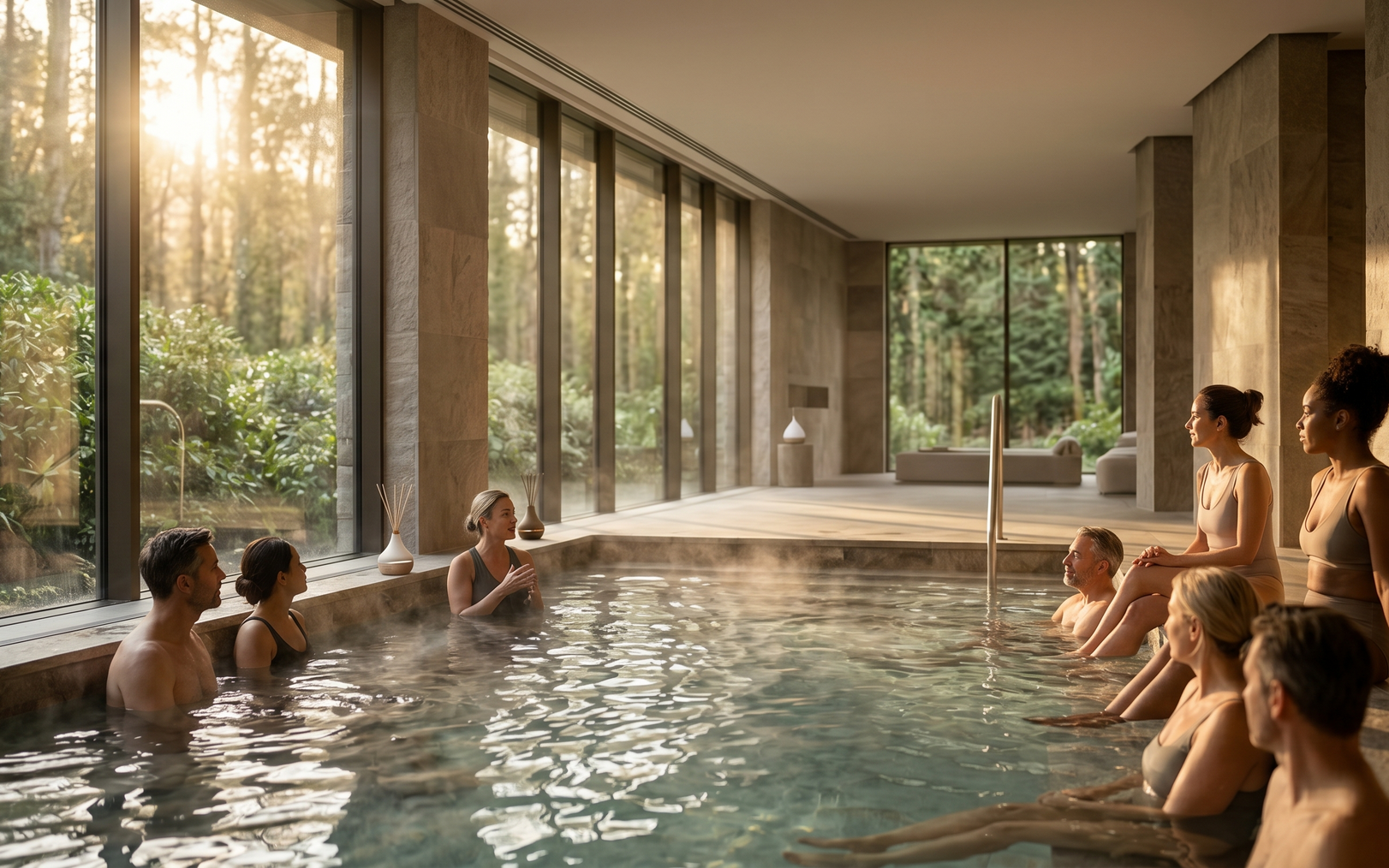
Hydrotherapy pools — including warm water immersion pools, cold plunge pools, and contrast bath circuits — offer a complementary approach. The oscillation between heat and cold creates what practitioners describe as a "vascular pump effect," where repeated dilation and constriction of blood vessels flushes the system, reducing inflammation and accelerating cellular repair. Athletes have long used contrast therapy for performance recovery, but increasingly, everyday clients are discovering these benefits for stress management, hormonal regulation, and sleep quality.
Aromatherapy, often dismissed as ambience, is gaining renewed scientific interest. Essential oils including lavender, eucalyptus, and peppermint have demonstrated measurable effects on the autonomic nervous system, influencing cortisol levels, blood pressure, and parasympathetic activation. When integrated into spa environments through diffusion systems, steam infusion, or topical application during massage, these compounds deepen the physiological benefits of the experience.
Designing a Spa Amenity Suite That Delivers Results
For wellness facility operators, the question is no longer whether to offer spa amenities, but how to build a suite that delivers genuine therapeutic outcomes rather than superficial novelty. At Wellness World Media, we speak with practitioners, facility owners, and industry experts regularly, and the consistent thread in their advice is this: function must lead, and experience must follow.
A well-designed spa amenity suite begins with a clear understanding of the client population it serves. A facility catering primarily to elite athletes will prioritise cold-contrast circuits, compression therapy, and recovery-focused treatment rooms. A wellness centre serving an ageing demographic may build around hydrotherapy pools, gentle heat treatments, and therapeutic massage suites. A holistic health hub might layer in sound therapy rooms, breathwork spaces, and meditation chambers alongside traditional wet-area amenities.
What separates great spa facilities from average ones is the attention to the physiological journey. Experienced operators design client flow so that each amenity is encountered in a purposeful sequence — heat before cold, passive therapies before active ones, individual treatments before group experiences. This sequencing is not accidental; it reflects an understanding of how the nervous system and vascular system respond to stimulus, and how to guide a client from sympathetic arousal to parasympathetic recovery.
Staffing is equally critical. Every person on the floor should be able to explain the physiological rationale behind each amenity, contraindications for specific client populations, and how to safely guide clients through the experience. Wellness World Media regularly features expert practitioners in our contributor community — professionals like naturopaths, physiotherapists, and Chinese medicine practitioners — who bring precisely this depth of knowledge to their facilities. We encourage all operators to build their teams with the same calibre of expertise. Explore our contributor profiles at wellnessworldmedia.com.au/contributors.
Risk, Responsibility, and the Operator's Duty of Care
The expansion of spa amenities brings with it an expanded scope of responsibility. The very same physiological mechanisms that make heat and cold therapies so effective also introduce real risk if they are not properly managed. Thermal shock, hypotension, and in rare cases, cardiac events have been reported in poorly managed sauna and cold-plunge environments. Clients with pre-existing cardiovascular conditions, pregnancy, or certain medications can face elevated risk from temperature extremes.
This is why Wellness World Media is deeply committed to promoting responsible operation alongside excellent programming. Our Resources section exists to help operators navigate the intersection of innovation and duty of care. One of the most critical steps any spa or wellness centre operator can take is ensuring that their insurance coverage is explicitly aligned with the services they provide.
Standard gym or fitness facility insurance policies are rarely designed to account for the specific risks associated with thermal therapies, hydrotherapy, or recovery modalities. As our team outlines on our
Wellness Insurance resource page, the industry has evolved faster than the insurance market, and many operators are running services that fall into coverage gaps without realising it. A comprehensive wellness insurance review — conducted with a specialist broker who understands the full scope of contemporary wellness operations — is not optional; it is foundational.
Share Articles and Blogs
Recent Articles and Blogs