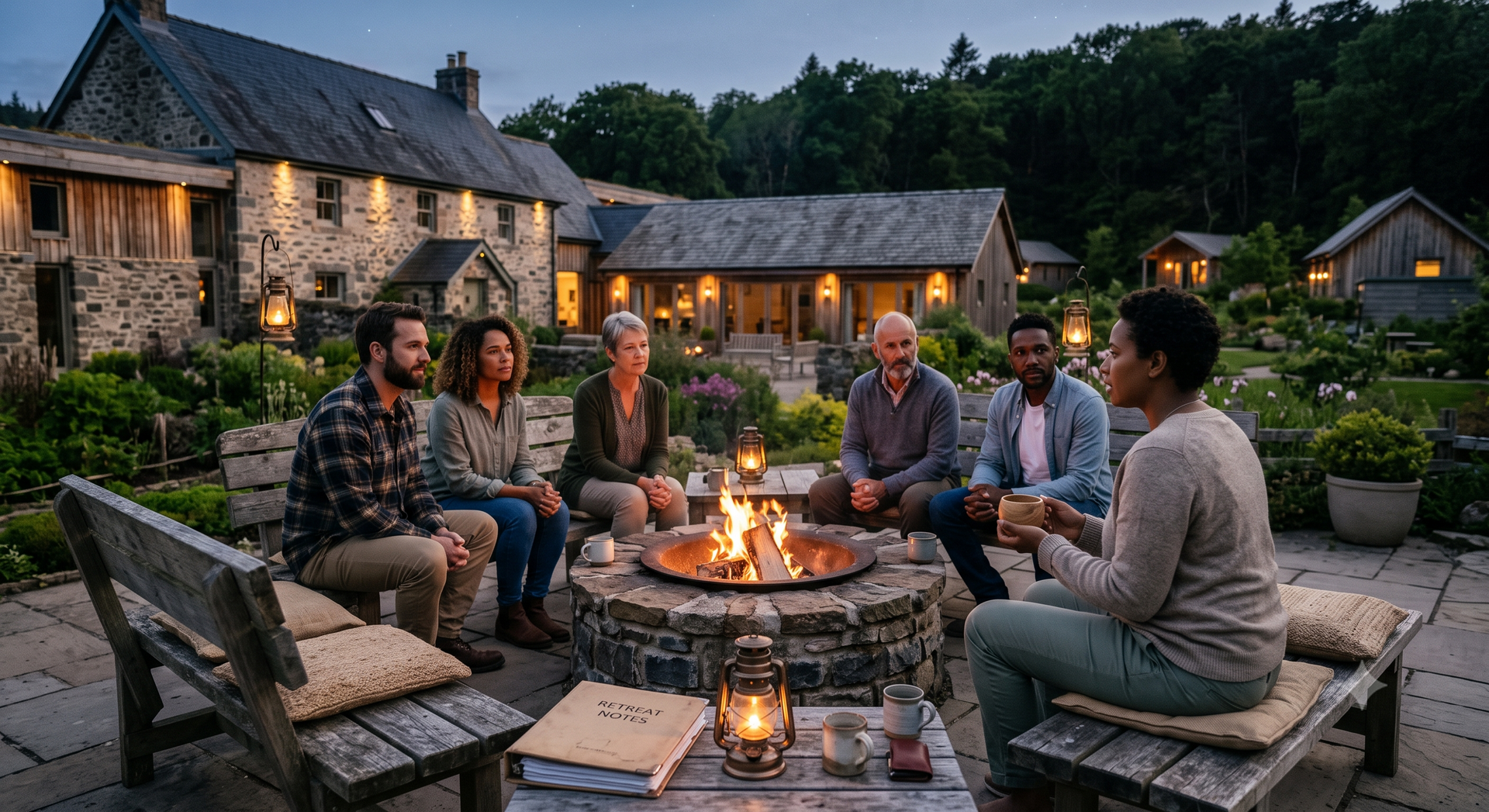
Shifting from external achievements to sustainable performance and wellbeing

Rethinking success beyond visible achievements
For decades, success has been measured through visible outcomes—income, job titles, business growth, and material gains. These metrics are easy to quantify and compare, but they don’t always reflect how a person actually feels.
That gap is becoming harder to ignore.
What is the value of achievement if it comes with constant stress, low energy, or limited personal time? What does success mean if it leads to burnout?
This shift in perspective is redefining success. Wellness is no longer separate from achievement—it is becoming a core component of it.
The question is no longer just “How much have I achieved?” but “Can I sustain this lifestyle long-term?”
A system built on output, pressure, and constant progression
Historically, success followed a linear path:
- Work more
- Earn more
- Achieve more
- Repeat
This model often rewarded long hours, high pressure, and constant availability. Rest was treated as something earned—not required.
While effective in producing results, it often came with trade-offs:
- Ongoing stress
- Physical strain
- Mental fatigue
- Weakened relationships
Over time, these costs begin to outweigh the benefits.
Growing awareness of sustainability, burnout, and lifestyle design
Several factors are driving this shift:
Increased Awareness of Burnout
Burnout is now widely recognized as a result of prolonged imbalance, not just individual weakness.
Access to Information
People have greater access to knowledge around mental health, productivity, and lifestyle optimization.
Changing Work Structures
Remote work and flexible schedules have increased awareness of how time and energy are spent.
Long-Term Thinking
There is a growing focus on sustainability—not just in business, but in personal wellbeing.
These changes are reshaping priorities at both individual and organizational levels.
Why better wellbeing leads to better output
A common misconception is that focusing on wellness reduces productivity.
In reality, it enhances it.
When wellness is prioritized:
- Energy becomes more stable
- Focus improves
- Decisions become clearer
- Recovery becomes more efficient
This leads to consistent, high-quality performance over time—not just short bursts of output.
Shifting from time-based work to energy-based performance
Traditional models focus on hours worked. Modern approaches focus on how effectively those hours are used.
Two people can work the same number of hours but produce very different outcomes based on their energy levels.
High energy enables:
- Faster thinking
- Better decision-making
- Increased creativity
- Consistent execution
Low energy results in:
- Slower output
- More errors
- Reduced focus
- Lower motivation
Wellness directly influences energy—making it a key driver of performance.
Hidden trade-offs that accumulate over time
Success without wellness often comes with delayed consequences:
- Declining physical health
- Increased stress and anxiety
- Lower job satisfaction
- Reduced overall quality of life
These effects build gradually, eventually limiting long-term performance and sustainability.
Designing a lifestyle where work and life can coexist
The concept of work-life balance is evolving.
Rather than strict separation, many are focusing on integration—creating a system where work and personal life function together without constant conflict.
This includes:
- Flexible schedules
- Defined boundaries
- Prioritized recovery time
- Alignment with personal values
The goal is not to eliminate stress, but to manage it effectively.
The growing importance of focus and cognitive performance
In a high-information environment, mental clarity is a competitive advantage.
Wellness supports this by:
- Reducing mental overload
- Improving concentration
- Enhancing emotional control
Practices like structured breaks and reduced multitasking contribute directly to clearer thinking and better decisions.
Why rest is essential for sustained output
Recovery is often underestimated.
In traditional models, rest is viewed as inactivity. In modern wellness, it is seen as necessary maintenance.
Without recovery:
- Energy declines
- Performance drops
- Stress accumulates
With recovery:
- Energy is restored
- Focus improves
- Performance becomes sustainable
This applies across physical, mental, and emotional levels.
Aligning ambition with sustainability
Achievement is no longer just about results—it’s about how those results are achieved.
Key considerations now include:
- Can this pace be maintained?
- Does this align with personal values?
- What is being sacrificed for this outcome?
This shift doesn’t reduce ambition—it refines it.
Designing spaces that support both productivity and wellbeing
Your environment directly influences how you perform.
Factors such as lighting, noise, layout, and digital distractions all play a role.
Optimizing your space can:
- Reduce stress
- Improve focus
- Increase efficiency
This is why more professionals are intentionally designing their environments.
The overlooked factor in long-term success
Success is often viewed as individual—but social connection plays a significant role.
Strong relationships can:
- Provide emotional support
- Reduce stress
- Improve overall satisfaction
Isolation, on the other hand, negatively affects both wellbeing and performance.
Moving away from one-size-fits-all success models
Success is becoming more personalized.
Some prioritize:
- Career advancement
- Financial growth
- Flexibility
Others focus on:
- Health
- Family
- Personal fulfillment
Wellness enables individuals to define success based on what is sustainable and meaningful for them.
Small adjustments that create long-term balance
This shift doesn’t require drastic change. It starts with small actions:
- Setting clear work boundaries
- Prioritizing sleep and recovery
- Managing workload effectively
- Making time for non-work activities
- Tracking energy instead of just time
These adjustments improve both performance and sustainability.
Sustainability as the foundation of lasting success
Short-term success can be driven by intensity. Long-term success depends on sustainability.
Wellness supports:
- Consistency
- Adaptability
- Resilience
Without these, even high achievement becomes difficult to maintain.
Success as a sustainable system, not just an outcome
Success is no longer defined solely by external results. It is increasingly measured by how those results are achieved—and whether they can be sustained.
Wellness plays a central role in this shift.
It supports energy, clarity, resilience, and long-term performance while reducing the hidden costs of traditional success models.
By integrating wellness into daily life, success becomes more than an outcome—it becomes a system that can be maintained over time.
Share Articles and Blogs
Recent Articles and Blogs