
Greg Brady
Often associated with the surnames Riordan or Varvis in specific professional contexts is a multi-talented athlete, entrepreneur, and high-performance expert. She is widely recognized for her background as a world-class competitor and her current work bridging the gap between physical and mental health.
Professional Leadership
Meghan has translated her athletic discipline into several successful ventures:
- Founder of WellCorp Health and Wellness: An international corporate wellness company that integrates technology, fitness, and mental health to improve workplace culture and productivity.
- Buzvil: The creator of a global health and fitness app designed to make wellness accessible.
- Master Coach: She is an International Master Coach for Altitude Training and Suspension Training, and she heads Total Gym Fitness Equipment in Australia.
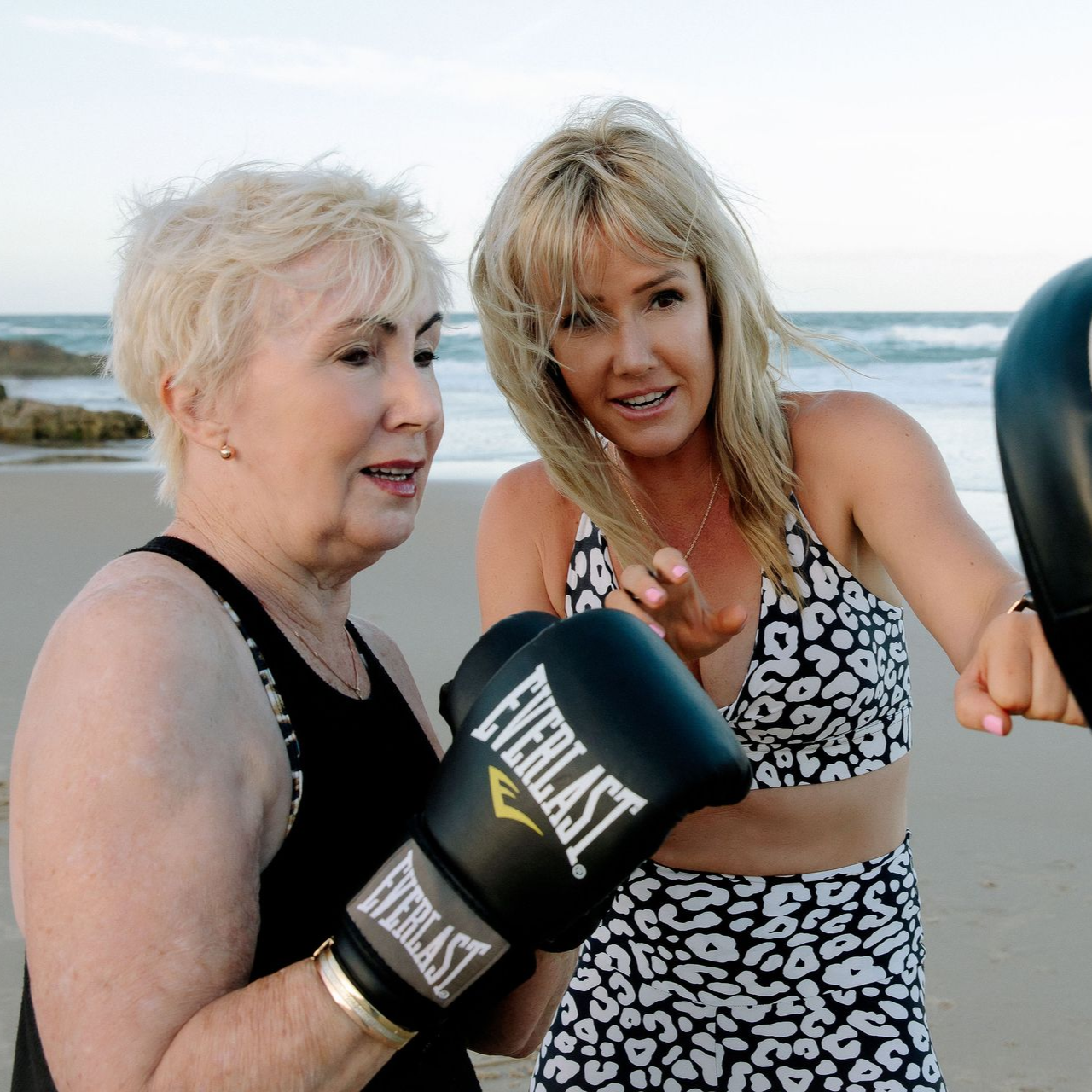
Athletic Background
Meghan's foundation is built on elite-level competition across multiple disciplines:
- World-Class BMX: She was a top-tier BMX bicycle racer from a young age, holding the #1 rank in Canada for seven years and competing on the world championship circuit.
- Professional Basketball: She played competitive basketball for York University (ranking 3rd in Canada) before moving to Australia to play professionally.
- Australian Ninja Warrior: She gained public visibility as a "Ninja" contestant on Channel Nine’s Australian Ninja Warrior, showcasing her extreme physical agility.
- Stunt Woman: She has appeared as a stunt professional and actor in major blockbusters including Elvis, Aquaman, and The Portable Door.
What She Stands For
Meghan’s philosophy is centred on holistic peak performance. Her work is defined by several key pillars:
- Bridging the Gap: She is a vocal advocate for "redefining and bridging the gap between physical health and mental health," believing that one cannot reach peak performance without addressing both.
- The "Triad of Wellbeing": Her programs typically focus on the intersection of Fitness, Nutrition, and Mindfulness.
- Resilience through Movement: Drawing from her experience in extreme sports (like wakeboarding and stunt driving), she stands for the idea that physical challenges are a gateway to mental breakthroughs and personal growth.
- Grief and Trauma Advocacy: In her work as a psychotherapist and author (often under Meghan Riordan Jarvis), she stands for the importance of grief education, helping individuals and corporate leaders navigate loss and "move energy" through the body to foster healing.
ARTICLE
TEACHING BEYOND WORDS
Spiritual Intelligence: Teaching Beyond Words
After decades of walking the path, you come to understand one essential truth: proper communication goes far beyond words. Words can be helpful, yes, but in the pursuit of mastery, they are often the last to matter.
The body already knows. The spirit is listening. The intuition is leading.
A true teacher doesn't just speak to a student; they feel them. You must learn to sense where their understanding truly lies, not from what they say, but in how they move, how they react, and how they absorb the energy in any given moment.
This is because everyone receives truth differently. Some learn best through hearing, absorbing the rhythm and cadence of instruction.
Others need to think it through, to analyze and connect each movement to a logical structure. Still others must feel it, through emotion, through instinct, through the unspoken resonance of the lesson. There are those who must experience it, physically. They need to feel the force of a technique.
The Two Guardians: Instinct and Intuition
To walk this path, you must awaken the two guardians that already reside within you - Instinct and Intuition. Instinct is the body's first guardian. It is the body's natural language. Before the mind can even form a sentence, the body has already responded. In sparring, in conflict, or in moments of real life danger, instinct is what protects. It reacts, it anticipates, it adjusts. You don't think about getting out of the way, you just move.
This is not learned. This is awakened.
Martial training does not give you instinct, it refines it. It strips away the hesitation, the doubt, and the mental clutter. It sharpens your natural capacity to sense danger, respond to subtle shifts in energy, and act without delay. This is why this practice is more than technique. It is the cultivation of pure
awareness. Presence. Readiness.
Intuition is the soul's inner compass. If instinct is the body's guardian, intuition is the soul's guide. In teaching, you will see students suddenly "get it" before they could ever explain how or why. A movement flows through them with a natural grace.
A complex pattern clicks into place. A correction lands not in their ears, but deep in their body. That is intuition at work, when something feels right at a level deeper than conscious thought.
As a mentor, you learn to rely on this every day. You don't follow a rigid method. You learn to read the room. You tune in to the subtle energy of each student. You let the lesson reveal itself, not just through a set curriculum, but through a living connection.
Intuition allows us to see beyond what is visible. To hear what isn’t being said. To feel where the real teaching truly needs to happen.
The Temple of Knowing
The dojo, the mat, the place of practice, this is not just a room. It is not a gym. It is a temple of awareness.
In this sacred space, we are not learning combat; we are relearning how to trust ourselves. We learn how to connect our raw instinct with disciplined action. We refine our intuition through repetition, but also through stillness.
In this space, communication becomes a holistic experience. Words may be spoken, but the real teaching occurs through the rhythm of breath, the quality of presence, and the subtle energy shifts in posture and gaze. The lesson happens in the
pause before a strike. It happens in the sincerity of the bow. It happens in the silence between techniques.
This is a spiritual language, a language of respect, awareness, and internal mastery.
This is where you learn to return to your own inner authority. Too many people in this world have abandoned their inner knowing in favour of someone else's definition of truth.
As a martial artist, you learn quickly: what you know in your body, in your gut, in your spirit, is your truth.
Spiritual intelligence is not mystical fluff. It is the highest form of embodied awareness. It’s trusting what your senses tell you long before your intellect has time to catch up. It’s honouring your instincts, cultivating your intuition, and allowing experience to be your most outstanding teacher.
Words matter, yes certainly, but they only matter when they are backed by a lived, embodied truth. What we pass on to others is not just what we say, but how we move, how we carry ourselves, and who we are in every single moment.
The Essential Truth: Remembering Who You Are
This brings us to the great misconception of our journey. We are often taught that life is a school, a place where we are sent to learn life's lessons.
We are told that if we do not learn from our mistakes, our limited thinking, and our harmful habits, we are doomed to repeat them.
This is a noble idea, but it is not the essential truth. The truth is that there is nothing to learn, your soul already knows everything.
You are here not to acquire knowledge, but to remember it. You are here to experience who you are not, and from those very experiences, decide who you truly desire to be.
Through countless opportunities to choose what is not aligned with your true self, you are given a chance to remember who you indeed are: love and light.
This is not a passive journey. Every time you choose an aspect of yourself that does not resonate with your true nature, be it fear, anger, or doubt, you gain insight.
You are given a sharper contrast, a deeper understanding of your spiritual essence.
Your thoughts, your words, your expressions, and your actions are sacred. They are the tools by which you create your reality.
When you finally recognize who you are, your choices gain a profound meaning and purpose. Your life, your practice, and your every interaction become an act of service.
You are here to embody and share the love and light of your spiritual creation. By demonstrating this, by living this truth, you illuminate the path for others who are lost in the darkness, helping them, in turn, discover their own inner light. The following five exercises are a practical means to develop
and use this philosophy in daily life and the more you use it, the more aware of your abilities.
1. "The Language Beyond Words"
Practice: The Partner Sensitivity Drill
This exercise is designed to bypass verbal analysis and teach you to listen with your body.
- How to do it: Stand facing a partner in a relaxed, natural stance. One person (the "Receiver") closes their eyes. The other (the "Giver") places a hand very lightly on the Receiver's shoulder or upper back.
- The Giver's job is to think about a direction (a gentle push, a slight pull, a guide to the left) for a full three seconds before applying any physical pressure The Receiver's job is to quiet their mind and feel the intention from the Giver, the subtle shift in energy, the change in weight, the electrical "charge" that precedes the motion.
- After a moment, the Giver applies the gentle pressure.
Switch roles. This drill trains you to sense what isn't being said and to feel the "language beyond words
2. "The Two Guardians: Instinct"
Practice: The 'Soft Eyes' Scan (Awakening Instinct)
Instinct is sharpened by moving from "hard focus" to "total awareness." This is a classic martial concept often called Zanshin (remaining mind).
- How to do it: Stand or sit comfortably. Instead of focusing your eyes intensely on a single point (like reading this text), "soften" your gaze.
- Allow your peripheral vision to expand. Your goal is not to look at everything in the room, but to sense everything.
- Become aware of the furthest points to your left and right, and the floor and ceiling, all at the same time, without moving your eyes
- Notice subtle movements, shifts in light, or changes in the "feel" of the room. This is your Instinct in its ready state, calm, expansive, and prepared, not tense and narrow.
Practice this for 60 seconds.
3. "The Two Guardians: Intuition"
Practice: Intuitive Stillness (Honoring Intuition)
Intuition is the soul's guide, but it whispers. It cannot be heard over the noise of the conscious mind. This practice creates the silence for it to be heard.
- How to do it: At the end of a workout, a practice session, or a long day, sit in seiza (formal kneeling) or cross-legged. This is often called Mokuso (quiet contemplation).
- Close your eyes. First, simply observe the rhythm of your own breath (Kokyu). Don't try to change it; just notice it.
- After a minute, let go of the breath. Your only job is to sit in the stillness. Do not search for answers. Do not ask your intuition questions.
Your task is to simply create the empty space. By honoring the silence, you give your intuition the room it needs to "land" in your body, just as the article says. Do this for 2-3 minutes
4. "The Temple of Knowing"
Practice: The Threshold Bow (Creating Sacred Space)
This transforms a simple action into a powerful mindset ritual, turning any space into a "Temple of Knowing."
- How to do it: Every time you step onto your mat, into your gym, or even into your home office to do "deep work," pause at the threshold.
- Bring your feet together. Perform a deliberate, standing bow (Ritsurei). This bow is not for anyone else. It is a physical declaration to yourself. You are saying: "I am leaving the outside world behind. I am here, now. I am present. I am open. I am ready to trust what I feel."
- This simple act clears your mental clutter and respects the "sincerity of the bow," instantly connecting you to your purpose.
5. "The Essential Truth: Remembering Who You Are"
Practice: The 'Hara' Affirmation (The Act of Remembering)
This practice shifts your energy from a state of "learning" (implying lack) to "remembering" (implying wholeness).
- How to do it: Stand in a stable stance. Place one hand over your heart. Place your other hand over your hara (your center of gravity, about two inches below your navel).
- Close your eyes and breathe deeply into your hara.
- State aloud (or just in your mind, but with full intention): "I am not here to learn. I am here to remember.’
- Feel the vibration of that statement in your center and in your heart. This is a verbal ritual that uses your own voice as a tool to realign your thoughts with your "inner authority" and "spiritual essence."
Course Promotions Area
Book the perfect summer vacation for you and your family. With heated pools, a wave pool, basketball courts and more, you'll never run out of things to do. Just make sure to reserve your spots now - so we don't run out of room.