Christian Grubl Explores the Path of the Yamabushi Monks
The spiritual path is not one-size-fits-all. While many seek peace in comfort and quiet contemplation, others are drawn to a more arduous path, one that tests the very limits of human endurance. This is the vision of "the hard way" to enlightenment, a path embodied by the Yamabushi, the
mountain monks of Japan.
This is not a gentle retreat. Imagine a twelve-hour march through the freezing mountains, pushing exhausted muscles over sharp stones and treacherous roots, soaked to the bone, and subsisting on handfuls of leftover rice. This is the reality of Shugendo, the syncretic religion practiced by
the Yamabushi. This is a path that forces a confrontation with the self, asking the core question: "Why am I here?"
This profound and difficult journey attracts a dedicated few, including Westerners like Austrian Christian Grübl, who was drawn from an extensive background in martial arts to the mystical practices of the Yamabushi monks. Christian’s journey to become one of the first European Yamabushi highlights the demand from people to search extensively, to find a deeper meaning of life, through ancient, rigorous discipline. The Shugendo path is filled with fascinating, almost primal, methods for achieving spiritual clarity. For some this is the only way to achieve this state of mind.
Fire and Water: The Tools of Purity
The Yamabushi use nature as a tool for transformation, primarily through the elements of water and fire.
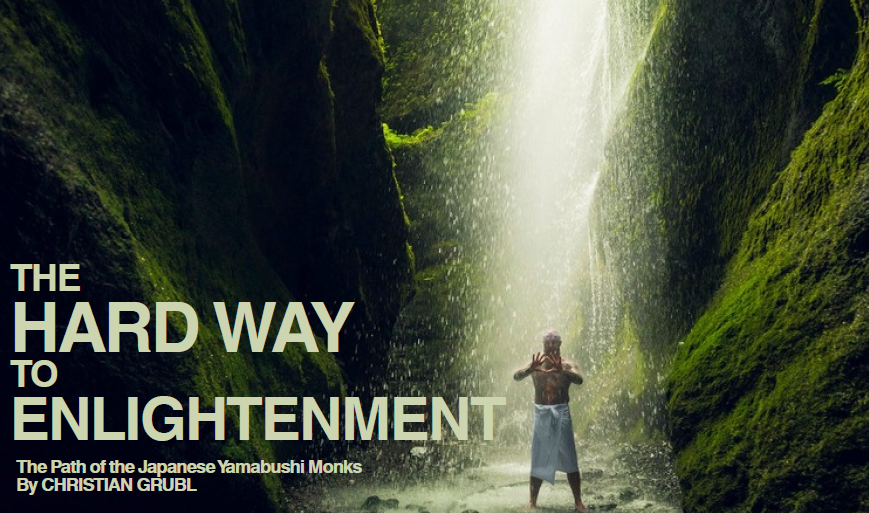
Takigyo – Meditation Under the Waterfall
This is far more than a cold shower; it is a profound ritual of purification. Rooted in Shinto mythology, Takigyo is a practice of total surrender. The ascetic, or Gyoja, stands beneath the crushing force of a natural waterfall, even in winter. The goal is to move beyond the physical shock and enter a
state of deep acceptance. By reciting the mantra of the deity Fudo Myoo (the Unshakable Wisdom King), forming a specific mudra (hand gesture), and visualizing a mandala, the practitioner symbolically absorbs the deity's fiery, determined energy. The waterfall becomes a cosmic connection, a direct line to the universe that "washes away" daily mental clutter and material attachments. It is, in essence, a preparation for death, a total release of the ego.
Goma – The Sacred Fire Ceremony
In contrast to the descending water, the Goma ceremony uses rising fire. This is a meticulously detailed ritual where offerings and wooden sticks inscribed with wishes are consecrated in a sacred fire. The monks, often chanting to the powerful beat of a taiko drum, create an intense vibration of energy that resonates through the entire temple. The vision here is one of transformation; the rising smoke is believed to carry the prayers and offerings directly to the deities in the universe. It is a powerful, energetic communion that requires years of dedicated practice to master.
The reward of this path, is a profound sense of freedom and a clarity that can only be earned the Hard Way.
The spiritual paths of the Yamabushi and the warrior monks and even the ninja clans who adapted their secret teachings for martial purposes—are famously grueling. These practices, like fire-walking or hanging from cliffs, were designed to forge a "superhuman" discipline and psychological strength.
Today, this path is fading. In Japan, as in the West, fewer successors are willing to submit to such dogmatic rules and physical hardship.
And yet, the "hard way" endures for a reason. While the specific rituals are unique, the common understanding is universal. Shugendo is not just a religion; it is a spiritual training to see the world from a different perspective.
The goal is to continually learn your personal limits and then, through intense focus and communion with nature, push just beyond them. For those who walk this path, the reward is not comfort, but a profound sense of
freedom and a clarity that can only be earned the Hard Way.
Many people believe that Shugendo and the Yamabushi are connected to the ninja of the feudal era. However, this is only partially true, and today most Yamabushi are unwilling to discuss this connection.
In fact, the Sohei were warrior monks who used the skills they acquired through asceticism and meditation applied them to martial purposes.
The most famous of them was probably the monk Benkei in the 12th century. However, the ninja clans of various schools utilized the secret meditation system of Kuji-in and Kuji-kiri.
This form of channeling the body and magic is now only transmitted orally from priest to monk in "Kuden" and is considered secret teachings in many schools.
The ninja adapted the Kuji to use it for combat purposes, to gain strength, or to manipulate the opponent. Many densho of the various ninjutsu and samurai schools also mention that they repeatedly attended classes in esoteric Buddhist temples to learn these practices.
The Hard Way to Enlightenment
Christian Grubl Explores the Path of the Yamabushi Monks
The spiritual path is not one-size-fits-all. While many seek peace in comfort and quiet contemplation, others are drawn to a more arduous path, one that tests the very limits of human endurance. This is the vision of "the hard way" to enlightenment, a path embodied by the Yamabushi, the
mountain monks of Japan.
This is not a gentle retreat. Imagine a twelve-hour march through the freezing mountains, pushing exhausted muscles over sharp stones and treacherous roots, soaked to the bone, and subsisting on handfuls of leftover rice. This is the reality of Shugendo, the syncretic religion practiced by
the Yamabushi. This is a path that forces a confrontation with the self, asking the core question: "Why am I here?"
This profound and difficult journey attracts a dedicated few, including Westerners like Austrian Christian Grübl, who was drawn from an extensive background in martial arts to the mystical practices of the Yamabushi monks. Christian’s journey to become one of the first European Yamabushi highlights the demand from people to search extensively, to find a deeper meaning of life, through ancient, rigorous discipline. The Shugendo path is filled with fascinating, almost primal, methods for achieving spiritual clarity. For some this is the only way to achieve this state of mind.
Fire and Water: The Tools of Purity
The Yamabushi use nature as a tool for transformation, primarily through the elements of water and fire.
Takigyo – Meditation Under the Waterfall
This is far more than a cold shower; it is a profound ritual of purification. Rooted in Shinto mythology, Takigyo is a practice of total surrender. The ascetic, or Gyoja, stands beneath the crushing force of a natural waterfall, even in winter. The goal is to move beyond the physical shock and enter a
state of deep acceptance. By reciting the mantra of the deity Fudo Myoo (the Unshakable Wisdom King), forming a specific mudra (hand gesture), and visualizing a mandala, the practitioner symbolically absorbs the deity's fiery, determined energy. The waterfall becomes a cosmic connection, a direct line to the universe that "washes away" daily mental clutter and material attachments. It is, in essence, a preparation for death, a total release of the ego.
Goma – The Sacred Fire Ceremony
In contrast to the descending water, the Goma ceremony uses rising fire. This is a meticulously detailed ritual where offerings and wooden sticks inscribed with wishes are consecrated in a sacred fire. The monks, often chanting to the powerful beat of a taiko drum, create an intense vibration of energy that resonates through the entire temple. The vision here is one of transformation; the rising smoke is believed to carry the prayers and offerings directly to the deities in the universe. It is a powerful, energetic communion that requires years of dedicated practice to master.
The reward of this path, is a profound sense of freedom and a clarity that can only be earned the Hard Way.
The spiritual paths of the Yamabushi and the warrior monks and even the ninja clans who adapted their secret teachings for martial purposes—are famously grueling. These practices, like fire-walking or hanging from cliffs, were designed to forge a "superhuman" discipline and psychological strength.
Today, this path is fading. In Japan, as in the West, fewer successors are willing to submit to such dogmatic rules and physical hardship.
And yet, the "hard way" endures for a reason. While the specific rituals are unique, the common understanding is universal. Shugendo is not just a religion; it is a spiritual training to see the world from a different perspective.
The goal is to continually learn your personal limits and then, through intense focus and communion with nature, push just beyond them. For those who walk this path, the reward is not comfort, but a profound sense of
freedom and a clarity that can only be earned the Hard Way.
Many people believe that Shugendo and the Yamabushi are connected to the ninja of the feudal era. However, this is only partially true, and today most Yamabushi are unwilling to discuss this connection.
In fact, the Sohei were warrior monks who used the skills they acquired through asceticism and meditation applied them to martial purposes.
The most famous of them was probably the monk Benkei in the 12th century. However, the ninja clans of various schools utilized the secret meditation system of Kuji-in and Kuji-kiri.
This form of channeling the body and magic is now only transmitted orally from priest to monk in "Kuden" and is considered secret teachings in many schools.
The ninja adapted the Kuji to use it for combat purposes, to gain strength, or to manipulate the opponent. Many densho of the various ninjutsu and samurai schools also mention that they repeatedly attended classes in esoteric Buddhist temples to learn these practices.
You might also like