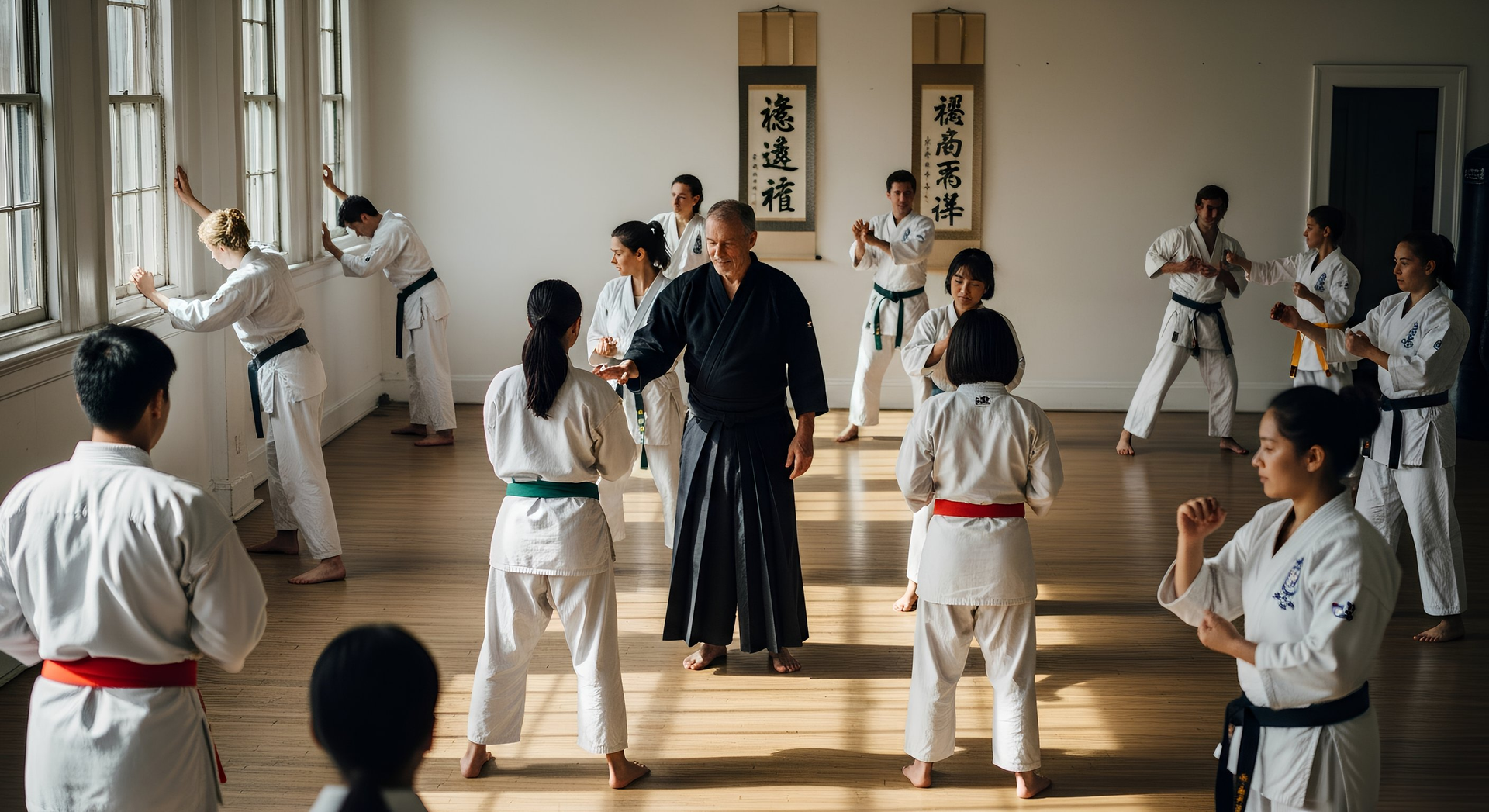
Training nurtures strength, discipline, and balance, offering a complete system for lifelong health and personal growth.
Why Martial Arts
Is One of the Most Complete Wellness Systems Ever Created
When people first walk into a martial arts school, they often arrive with a simple objective. Some want to learn self-defence. Others want to improve fitness. Parents bring their children hoping to develop discipline and confidence.
What many discover over time is that martial arts offers something far greater than any single benefit.
Martial arts, when taught correctly, is one of the most complete wellness systems ever created. It develops the body, sharpens the mind, strengthens character, and connects individuals to a supportive community. Unlike many modern fitness trends that focus on isolated goals, martial arts training cultivates a balanced and sustainable approach to health and personal development.
After decades of involvement in martial arts, both as a practitioner and as an instructor, I have seen firsthand how this traditional practice contributes to long-term wellbeing.
The Physical Foundations of Martial Arts Training
At its most visible level, martial arts training develops physical health.
Classes combine strength, flexibility, coordination, balance, and cardiovascular conditioning. Movements such as kicks, punches, throws, and footwork require the body to move efficiently and with control. Over time, students build stronger muscles, improved posture, and better overall mobility.
Unlike many gym workouts that focus on repetitive exercises, martial arts training challenges the body in a dynamic way. Students must constantly adapt to movement patterns, training partners, and technical drills. This variety keeps the body engaged while reducing the monotony that often causes people to abandon other fitness routines.
Equally important is that martial arts training can be adapted for almost any age or level of physical ability. A well-run school understands that longevity in training matters more than short bursts of intensity. Students are encouraged to progress steadily, building a strong foundation that allows them to continue training for decades.
Mental Focus and Emotional Balance
While the physical benefits of martial arts are clear, the mental benefits are just as significant.
Training requires concentration, awareness, and self-control. Whether practicing forms, drilling techniques, or sparring with a partner, students must remain present and focused. Over time, this mental discipline becomes a habit that carries over into daily life.
Many students find that martial arts training helps them manage stress more effectively. The structured environment of a class provides a healthy outlet for tension and frustration. Physical exertion releases stress, while the discipline of training encourages emotional balance.
In many traditional martial arts systems, breathing and mindfulness are also integrated into practice. These elements reinforce the connection between mind and body, helping students maintain clarity and composure both inside and outside the training hall.
Building Character Through Discipline
Perhaps one of the most powerful aspects of martial arts is its ability to shape character.
Progress in martial arts is earned through consistent effort. Techniques must be practiced repeatedly. Skills take time to develop. There are no shortcuts.
This process teaches patience, perseverance, and humility.
Students quickly learn that improvement comes through dedication and hard work. Setbacks are part of the journey, and overcoming challenges builds resilience. These lessons extend far beyond the training floor and into every aspect of life.
Martial arts also emphasises respect. Students show respect for instructors, training partners, and the traditions of the art itself. This culture of mutual respect helps create an environment where people can learn safely and grow together.
The Importance of Community
Another important element of martial arts wellness is the sense of community that develops within a school.
Training partners support each other’s progress. Beginners learn from more experienced students. Instructors guide and mentor their students over time.
This shared experience creates strong bonds. For many people, their martial arts school becomes a place where they feel welcomed, encouraged, and supported.
Community plays a critical role in maintaining long-term wellness. When individuals feel connected to others who share similar goals and values, they are more likely to remain engaged in healthy activities.
A martial arts school, when guided by positive leadership, becomes more than just a place to train. It becomes a community that promotes growth, wellbeing, and personal responsibility.
A Practice for Life
One of the greatest strengths of martial arts is that it can be practiced throughout a lifetime.
Children develop coordination and confidence. Teenagers learn discipline and resilience. Adults improve fitness while managing the pressures of work and family life. Older practitioners maintain mobility, balance, and mental sharpness.
The training evolves as the practitioner evolves.
In youth, martial arts may emphasize physical development and skill acquisition. Later in life, the focus often shifts toward refinement, strategy, and personal growth.
This adaptability allows martial arts to remain relevant and beneficial at every stage of life.
Wellness Beyond the Training Hall
Ultimately, martial arts is not limited to what happens during a class.
The lessons learned through training influence daily habits and decision-making. Students begin to value consistency, discipline, and self-awareness. These qualities contribute to healthier lifestyles, stronger relationships, and improved personal wellbeing.
Wellness is not a single activity or short-term goal. It is a way of living.
Martial arts provides a structured framework for developing that way of living. Through training, individuals cultivate physical strength, mental clarity, emotional balance, and personal integrity.
These are the foundations of true wellness.
A Tradition Worth Preserving
In a world filled with quick fixes and temporary trends, martial arts stands apart as a time-tested system for personal development.
It combines movement, discipline, philosophy, and community into a practice that benefits both the individual and the broader society.
For those who commit to the journey, martial arts offers far more than techniques of self-defence. It offers a path toward lifelong wellness.
And that is why, after many years in the martial arts industry, I continue to believe that martial arts remains one of the most complete wellness systems ever created.
Share Articles and Blogs
Recent Articles and Blogs