The Recovery Revolution Every Wellness Facility Should Understand
Introduction: Cold Is Everywhere — For Good Reason
Cold water immersion is not a new phenomenon. The Romans used frigidaria. Scandinavian cultures have paired sauna with lake plunges for centuries. Japanese cultures practised Misogi — ritual cold-water immersion as a form of spiritual and physical purification. Wim Hof, one of the most celebrated figures in contemporary wellness and a contributor to Wellness World Media through our contributors programme, has brought the practice of deliberate cold exposure to global mainstream awareness through his remarkable physiological feats and accessible breathing methodology.
What is new is the velocity at which cold plunge pools, ice bath facilities, and contrast therapy circuits are being integrated into professional wellness environments. At Wellness World Media, we are seeing this trend play out across the industry — from boutique recovery studios to integrated longevity centres and mainstream fitness clubs. And the science, increasingly, is giving operators compelling reasons to invest.
The Physiology of Cold Exposure: What Actually Happens
When the body is submerged in cold water — typically defined as water below 15 degrees Celsius for therapeutic purposes — a dramatic physiological cascade is initiated. Peripheral vasoconstriction redirects blood flow toward the body's core and vital organs. Heart rate initially increases, then stabilises. The sympathetic nervous system is strongly activated, triggering the release of norepinephrine — a neurotransmitter and hormone with powerful anti-inflammatory, mood-elevating, and focus-enhancing effects.
Research has documented a three-to-fivefold increase in norepinephrine levels following brief cold water immersion at 14 degrees Celsius. This neurochemical surge is one of the primary mechanisms underlying the reported mood benefits of regular cold exposure. Dopamine release has also been documented following cold immersion, rising by up to 250% above baseline and remaining elevated for extended periods — a neurochemical profile associated with motivation, alertness, and wellbeing.
At the tissue level, cold exposure reduces local inflammation and oedema — the accumulation of fluid in damaged tissue. This is the mechanism behind the longstanding practice of icing acute injuries. In a whole-body cold immersion context, the systemic anti-inflammatory effect supports faster recovery from intense training, reduced delayed-onset muscle soreness, and accelerated tissue repair.
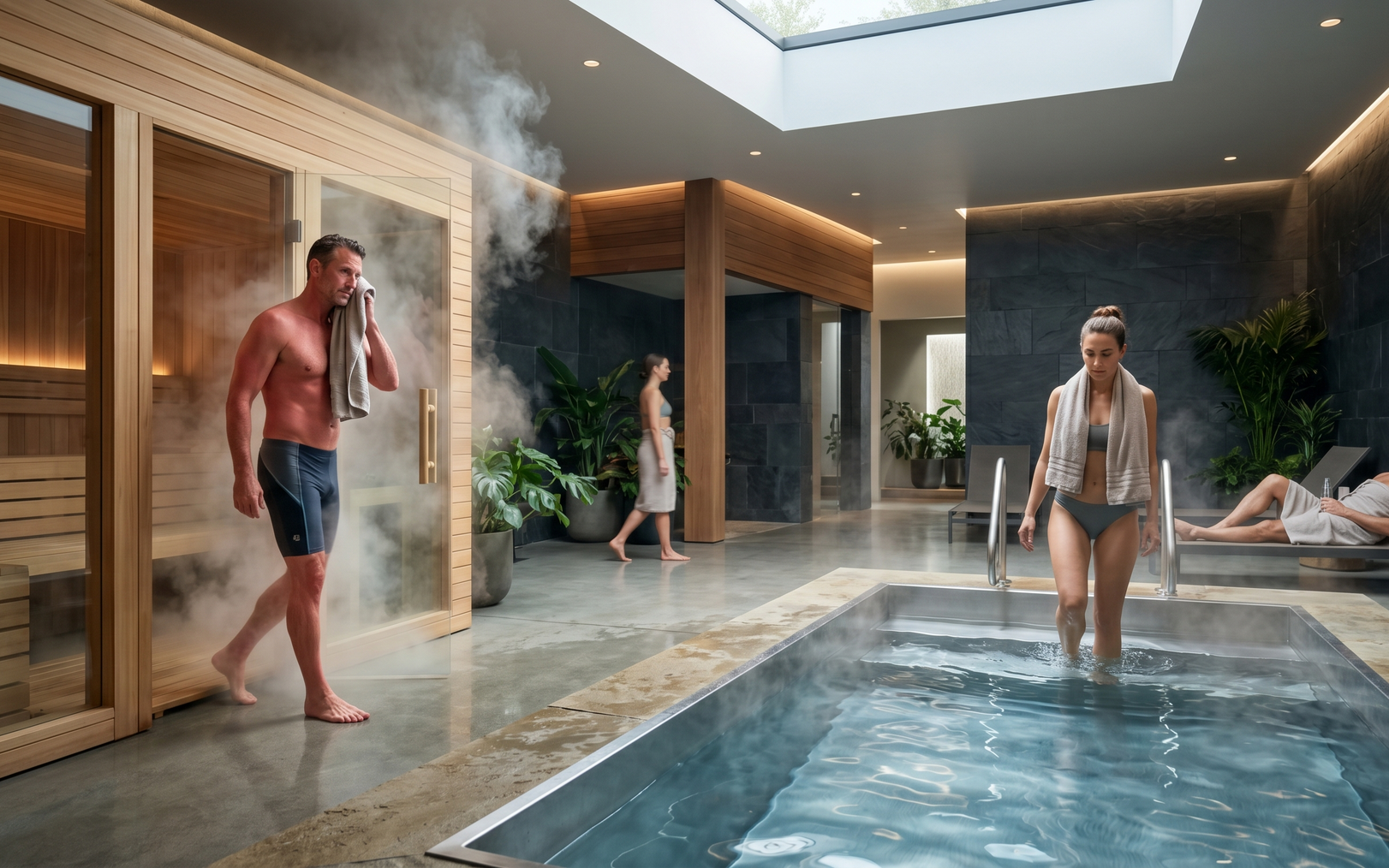
The practice of contrast therapy — alternating between heat exposure (sauna, hot pool, steam room) and cold immersion — amplifies these effects through what is described as a vascular pumping mechanism. Repeated vasodilation under heat and vasoconstriction under cold creates a dynamic flush of metabolic waste products from peripheral tissue. Many practitioners and researchers consider well-structured contrast therapy among the most potent recovery interventions available without pharmacological support.
Designing a Cold Therapy Suite for a Professional Wellness Environment
The market for cold plunge equipment ranges from portable inflatable units to bespoke, purpose-built pools with precision temperature control, filtration systems, and monitoring infrastructure. The choice of equipment is not merely an aesthetic decision — it directly affects the safety, reliability, and therapeutic quality of the experience.
Commercial-grade cold plunge pools for wellness facilities should maintain consistent water temperature (typically between 8 and 15 degrees Celsius), offer high-turnover filtration to manage hygiene across multiple users, incorporate entry and exit safety features, and ideally be monitored by integrated temperature and occupancy systems. The engineering requirements are more complex than most operators anticipate, particularly when integrating cold plunge infrastructure into existing building systems.
Client protocol design is equally critical. Recommended immersion durations vary by temperature, client experience level, and health status — but as a general framework, beginners should start with 30 to 60 second immersions at temperatures closer to 15 degrees Celsius and progress gradually. Clients should never be encouraged to hyperventilate before immersion, as this practice carries serious risk of shallow-water blackout. Breathing instruction — including the kind of calm, controlled breathwork popularised by Wim Hof — is a valuable complement to cold exposure programmes.
Contraindications and the Operator's Responsibility
Cold water immersion is not appropriate for all clients. Individuals with Raynaud's disease, unmanaged hypertension, significant cardiovascular disease, open wounds, or certain medications including beta-blockers that blunt the heart rate response to cold should be medically cleared before beginning a cold exposure programme. Pregnancy is generally considered a contraindication for extreme cold immersion.
The operator's duty of care in this space is significant. Thorough intake questionnaires, clear contraindication screening, mandatory induction sessions, and accessible emergency protocols are essential infrastructure for any facility offering cold therapy. As with all high-impact wellness modalities, documentation matters — both for clinical quality and for insurance purposes.
On that note, cold plunge and contrast therapy facilities should be reviewing their insurance coverage with a specialist who understands the specific risk profile of these modalities. Our Wellness Insurance page outlines how thermal shock — a genuine physiological event when cold immersion triggers a cardiac response in a susceptible individual — falls outside the scope of most standard fitness facility policies. Specialist wellness insurance is not a nice-to-have in this space; it is a necessity.
The WWM View: Cold Therapy as a Business Builder and a Clinical Asset
Cold plunge and contrast therapy represent one of the most exciting intersections of ancient wisdom and modern science in the contemporary wellness landscape. When delivered with clinical rigour, excellent client education, and robust safety protocols, these modalities can be powerful differentiators for wellness facilities — and powerful contributors to the long-term health outcomes of clients.
Wellness World Media is proud to feature contributors at the leading edge of this space — including Wim Hof, whose method has brought deliberate cold exposure to millions globally. Explore his insights and those of our entire contributor community at
wellnessworldmedia.com.au/contributors, read the growing body of cold therapy research featured in our articles section at
wellnessworldmedia.com.au/articles, and reach out to our team about how your facility can become part of our growing industry network at
wellnessworldmedia.com.au/get-involved.
Share Articles and Blogs
Recent Articles and Blogs