The Science and Practice of Healing Through Sound
Introduction: The Ancient Science of Sound
Long before modern neuroscience had the tools to measure the brain's response to acoustic stimuli, human cultures were using sound as a healing medium. Tibetan singing bowls, Aboriginal didgeridoos, Sanskrit mantras, Gregorian chants, and Sufi toning traditions all recognised that sound has the capacity to alter human physiology and consciousness. At Wellness World Media, we are proud to bridge the ancient and the scientific — and sound therapy is one of the most compelling areas where this bridge is being actively constructed.
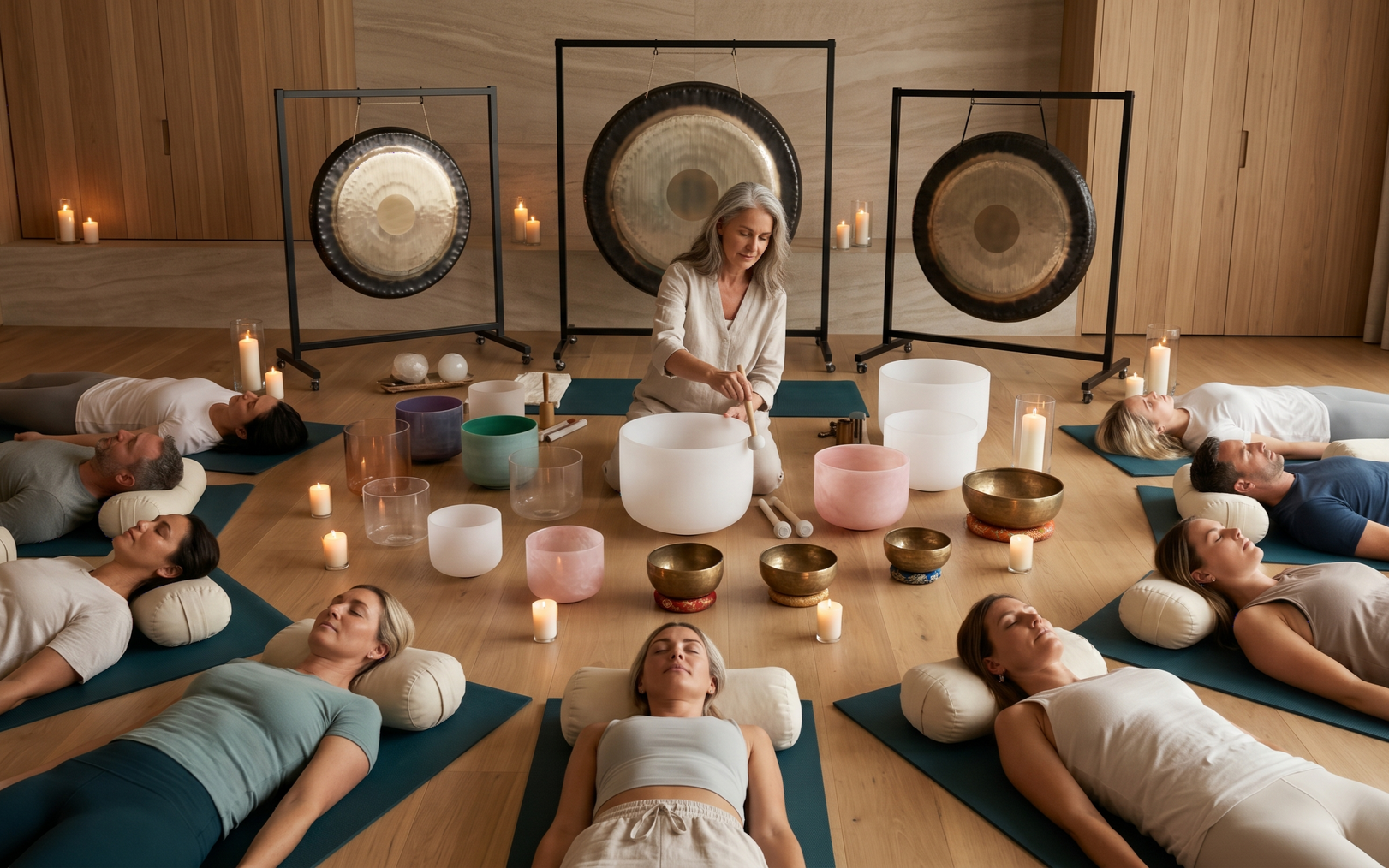
Contemporary sound therapy encompasses a range of modalities including sound baths (group immersion in the resonant frequencies produced by singing bowls, gongs, crystal bowls, and other instruments), binaural beats (an auditory processing effect that creates the perception of a tone at the difference frequency between two slightly different tones delivered to each ear), vibroacoustic therapy (the delivery of low-frequency sound vibrations directly into the body through a vibrating mat or chair), and more specialised clinical applications. Each of these sits within a plausible physiological framework that is increasingly supported by peer-reviewed research.
The Neuroscience of Sound Healing
The brain is exquisitely sensitive to acoustic input. The auditory cortex processes sound signals in milliseconds, and through extensive neural networks, these signals propagate to structures including the limbic system (governing emotion and memory), the hypothalamus (regulating the autonomic nervous system and hormonal signalling), and the prefrontal cortex (involved in executive function and conscious experience).
Brainwave entrainment — the tendency of the brain's electrical oscillations to synchronise with external rhythmic stimuli — is central to the proposed mechanism of many sound therapy modalities. Different brainwave states correlate with different states of consciousness and physiological arousal. Beta waves (13 to 30 Hz) characterise alert, active thinking. Alpha waves (8 to 13 Hz) are associated with relaxed alertness and creative flow. Theta waves (4 to 8 Hz) arise in deep meditation and the hypnagogic states between waking and sleep. Delta waves (0.5 to 4 Hz) predominate during deep, restorative sleep.
Sound therapy approaches that utilise specific frequency ranges, rhythmic patterns, or binaural beat differentials aim to guide the brain toward target brainwave states — typically alpha or theta for stress reduction, creativity, and recovery. Binaural beat research has documented reductions in anxiety, improvements in sleep quality, and enhanced creativity and cognitive performance in controlled study designs, though the literature is not without methodological limitations.
Vibroacoustic therapy — the delivery of low-frequency sounds in the 30 to 120 Hz range through a vibrating surface — has demonstrated measurable benefits for chronic pain management, anxiety reduction, and sleep improvement. The vibrations are absorbed directly by body tissues, creating a kind of internal acoustic massage that resonates with natural biological rhythms.
Singing Bowl Sound Baths: The Accessible Entry Point
For wellness facilities looking to introduce sound therapy programming, sound bath sessions — typically delivered in a group format with participants lying on yoga mats or bolsters while the practitioner plays singing bowls, gongs, and related instruments — offer an accessible and commercially viable entry point. The capital requirements are relatively modest (quality instruments represent the primary investment), the space requirements are flexible (any quiet, reverberant room can work), and client demand is growing strongly.
Quality of the practitioner is the critical variable. Sound healing facilitation requires skill, musical sensitivity, and a deep understanding of how different instruments, frequencies, and playing techniques affect the listener. The field does not yet have universal certification standards, which means operators need to be genuinely discerning in their assessment of practitioner qualifications and experience.
Integrating Sound Therapy Into a Multi-Modal Wellness Programme
Sound therapy is particularly effective as a complement to other wellness modalities. A sound bath following an infrared sauna session and cold plunge can deepen the parasympathetic response initiated by the thermal circuit. A vibroacoustic session before a breathwork class can reduce the somatic anxiety that sometimes arises in breath-based practices. Meditation pods with integrated binaural beat audio programming offer an individualised, on-demand sound wellness experience that requires minimal staffing.
The narrative coherence of a wellness facility's programming matters to premium clients. Sound therapy, positioned within a holistic philosophy that connects modern science with ancient wisdom traditions, aligns beautifully with the four pillars that guide Wellness World Media's own editorial framework: Modern Science, Healing Power, Spiritual Wisdom, and Mindful Living. Facilities that speak this language authentically — that can explain the neurological mechanisms of brainwave entrainment alongside the cultural history of singing bowl traditions — create a depth of client experience that is difficult to replicate.
Insurance and Practical Considerations
Sound therapy sits within the General Wellness (Low Risk) category from a risk management perspective, but facilities should ensure their public liability and professional indemnity coverage extends to practitioners and any vibroacoustic equipment in use. As our Wellness Insurance page outlines, assumptions about policy coverage without explicit verification can leave unexpected gaps.
We invite sound therapy practitioners and wellness facilities incorporating acoustic wellness programmes to contribute to our platform at
wellnessworldmedia.com.au/get-involved, explore our expert articles at
wellnessworldmedia.com.au/articles, and subscribe to Wellness World Media for ongoing insights at
wellnessworldmedia.com.au/subscribe.
Share Articles and Blogs
Recent Articles and Blogs