This article bridges the gap between extreme performance and everyday wellness, revealing how the Wim Hof Method is not just a "relaxation" tool, but a scientifically-proven "flight simulator" for the human soul that reconfigures the brain to master stress.
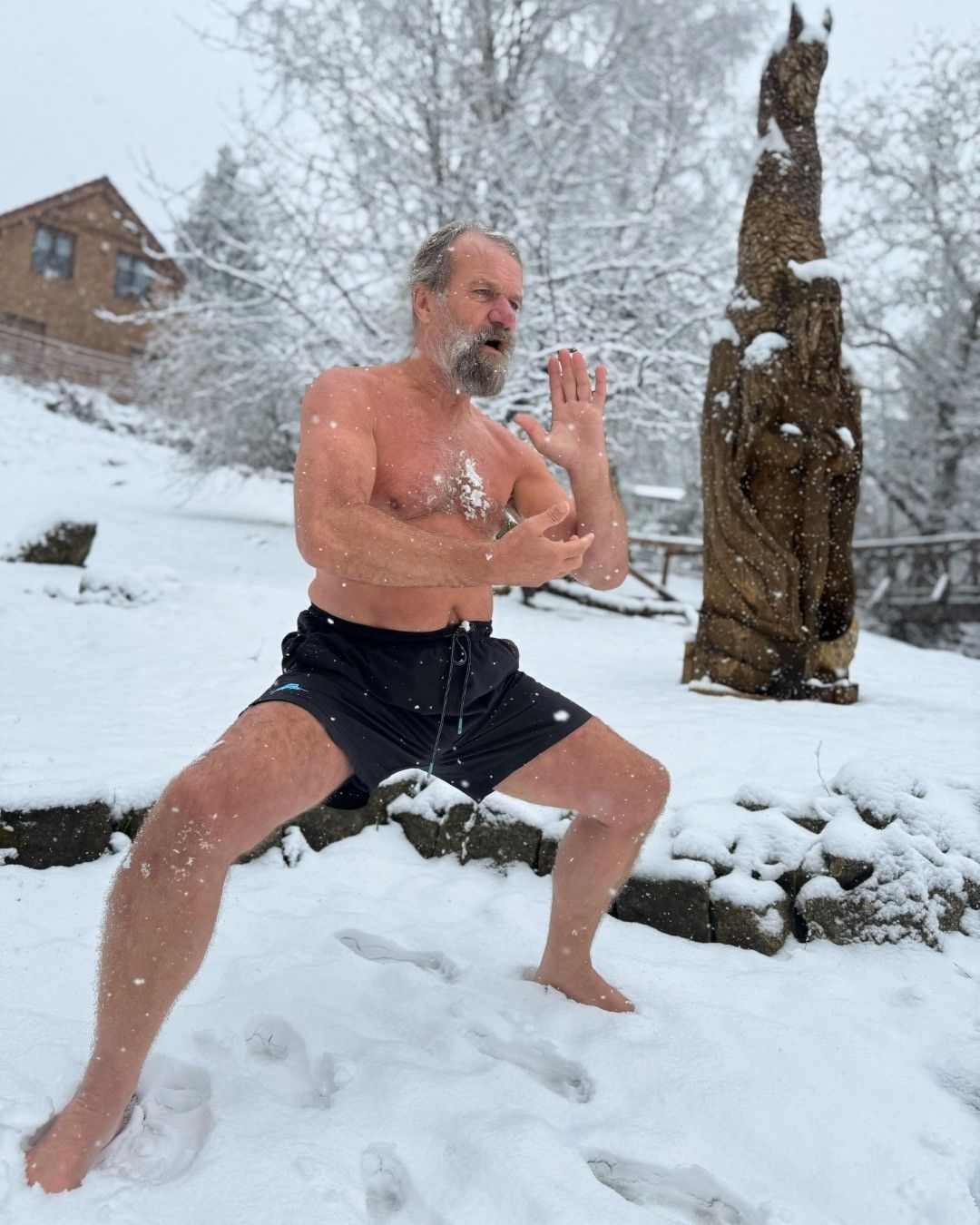
The Stress Paradox
The Future of Self-Mastery
Interview by Graham Slater
In an era where stress disorders, burnout and inflammatory disease are increasingly normalised, emerging research is challenging long-held assumptions about the limits of human physiology.
Wim Hof, known globally as
The Iceman, has moved beyond a phenomenon. What began as extreme cold exposure feats has evolved into controlled laboratory investigation. Multiple peer-reviewed studies now prove that elements of the
Wim Hof Method (WHM)—combining breathing techniques, cold exposure and focused intention—can influence the autonomic nervous system and immune response in ways once believed impossible.
Recent investigations involving endotoxin exposure, MRI scanning and neurophysiological analysis indicate that trained practitioners may voluntarily activate deeper regulatory systems of the brain and body. I sat down with Wim to explore what this means, not only for performance, but for humanity. We start with an in-depth investigation into the neurophysiology of hypocapnia, gamma-band reconfiguration, and the science of hormetic resilience for ourselves, moving into accessing 100% of brain capacity to live a healthier and more productive life.
The Science of Interoceptive Training
Over the past several years, there’s a craze gaining momentum across the globe, involving thousands of people. It’s deliberately stepping into freezing water or hyperventilating until their limbs tingle and their vision blurs. Initially viewed as a fringe practice of a charismatic daredevil, new research published in early 2026 has finally shown the science-backed benefits of such practice.
Through two landmark studies—a high-resolution EEG analysis by
Montenegro et al. (2026) and a large-scale clinical trial—we now understand that WHM is not a "relaxation" technique. It is a sophisticated, arousal-based system for
Interoceptive Training. Lets follow the science!
I. The Physiology of the "Breath"
Beyond Oxygen: Most people assume that deep breathing "oxygenates" the blood. Science tells a different story. The Montenegro study used capnography and oximetry to show that the primary driver of the WHM experience is actually the drop in Carbon Dioxide (CO2), known as Hypocapnia.
The Chemistry of the "High": When you perform cyclic hyperventilation, you exhale CO2 faster than your cells produce it. This leads to
Respiratory Alkalosis, where the blood pH rises.
The Result: This shift in pH causes peripheral nerves to become hypersensitive (the "tingling" sensation) and triggers a temporary constriction of blood vessels in the brain.
The Paradox: While O2 levels remain relatively stable, the brain perceives the low CO2 as a survival threat, triggering a massive release of adrenaline (epinephrine) from the adrenal glands.
II. The Brain Under Pressure: Gamma Waves and Alertness
The most striking finding of the 2026 study was the surge in Gamma-band activity (35 Hz). Gamma waves are the "fastest" brain rhythms and are associated with "binding"—the process of linking different sensory inputs into a single, coherent thought or experience.
During WHM breathing, the brain doesn't go to sleep; it enters a state of
High Arousal.
Beginners: Show high activity in the frontopolar regions. They are working hard to follow the rhythm and manage the strange new sensations of tingling and lightheadedness.
Experts: Show a
"Gamma Reconfiguration." Their brain activity is more distributed and organized, suggesting they have built a neural "highway" to process extreme physiological stress without panicking.
III. Experts vs. Naive Practitioners: The Connectivity Loop
The Montenegro study compared "Naive" participants (beginners) with "Level 2 Experts." The differences were not found in the intensity of the stress, but in how the brain organized it. Experts showed significantly more structured functional connectivity between three key regions:
The Insula: The part of the brain that senses the internal state of the body (heartbeat, temperature).
The Anterior Cingulate Cortex (ACC): The region that monitors conflict and emotional pain.
The Prefrontal Cortex (PFC): The center for logic and volitional control.
In beginners, these areas tend to act independently, often leading to a sense of "overwhelmed" panic. In experts, the PFC "talks" to the Insula, effectively telling the body: "I see the cold, I feel the CO2 drop, but we are in control."
IV. Cold Immersion: Top-Down Regulation
Cold exposure is the ultimate test of this connectivity. For the experts in the study, ice water didn't just cause a "shivering" reflex; it triggered a specific neural signature. While a beginner's brain is flooded with "Cold! Danger!" signals, the expert's brain uses Top-Down Inhibition. They utilize their frontal control regions to dampen the emotional reaction to the cold. This allows them to stay in the water while maintaining a steady heart rate, a process the PWC study calls Stress Self-Efficacy.
V. Hormesis: The "Stress Microdose"
Why would anyone put themselves through this? The PWC Semi-randomized trial (N=404) provides the answer through the lens of Hormesis.
Chronic Stress (Bad): Constantly high cortisol that wears out the immune system.
Acute, Controlled Stress (Good): A short, sharp spike in adrenaline followed by a period of deep recovery.
The PWC study found that WHM practitioners developed a higher threshold for everyday stress. By "practicing" a fight-or-flight state every morning in the shower or during breathing, the "real-world" stress of a deadline or a traffic jam feels small by comparison.
Interview: Graham Slater (GS) and Wim Hof (WH)
WFM continues -
GS: Studies have just proven that the WHM enhances endurance, immune response, accelerated recovery, and most astonishingly, the ability to consciously gain full access to deeper regions of the brain. Can you explain this?
WH: We use hormesis, controlled, self-induced stress like cold exposure and breathing exercises. This is acute stress applied with awareness. It activates primordial mechanisms within the body that are far stronger than what we access during normal exercise. The limitation is not age or genetics, it is physiology combined with the ability to control the mind.
I recently guided people in their 80s. Within days, they were immersed in ice water for 10 minutes. Age is not the barrier. Your willingness to explore your humanity is the only real limitation. Cold exposure activates the central nervous system. That stimulation moves into the brain, into deeper regulatory systems reconnecting electrical pathways and neurotransmitters. You begin to influence systems once thought automatic.
Accessing the Brain
GS: How long does it take for the average person to become aware of this ability and activate it at will?
WH: The nervous system is like a muscle. You can train it. With repetition, you create new neural pathways. What was once unconscious becomes conscious.
GS: How much control can we really obtain?
WH: Much more than most people believe and it goes beyond thinking. Normally we use thought to control movement, but we don’t go deeper. Through cold training and breathwork, you learn to access the limbic system and brainstem, areas tied to survival, emotion, and purpose.
Brain scans have shown that when I apply focused intention, subcortical regions light up intensely, areas related to pain suppression, dopamine regulation, and resilience. In one MRI comparison, passive versus consciously induced, the radiologists saw near-total brain activation. They described it as the brain lighting up like a Christmas tree.
This is not mystical. It is neurological access. When fear dissolves, you open doors to areas normally dormant. Fear is simply an emotion and when you learn to observe it rather than react to it, you bypass it.
The Role of Fear
GS: Many people find cold immersion confronting. How do you prepare them?
WH: Of course it feels cold. The body reacts, but once you understand you are safe, something shifts. Instead of resisting, you surrender and the body adapts. That adaptation builds confidence.
Fear becomes a teacher. You activate neural departments not normally connected to willpower. With practice, you strengthen dopamine regulation and stress response systems. You literally increase resilience capacity. Warriors understood this. Strength is not domination, it is control over oneself.
The 67-Minute Ice Challenge
GS: Recently, approaching 67, you set a live challenge to remain under ice for 67 minutes and you went 1 hour 10 minutes, calm and controlled. Was that breathwork or pure mind?
WH: Pure mind using the correct neurological focus.
GS: Do you train with breathwork first, then when the mind reaches heightened control, you can enter extreme conditions without panic?
WH: Exactly.
Brain Scans & Dopamine
GS: You underwent transcranial magnetic stimulation and MRI analysis. What did that reveal?
WH: We compared a passive scan with one induced by conscious activation. After 30 minutes of breathing and retention, I re-entered the MRI. The change was dramatic. Regions tied to mood regulation, pain suppression, and survival instinct showed profound activation. It demonstrated voluntary influence over areas linked to dopamine balance.
Depression, anxiety, these often involve dysregulation. When you can consciously influence those regions, you reclaim agency.
Applying It to Daily Life
GS: Once someone accesses this state, how do they apply it?
WH: You don’t need 100% activation all the time, just as you don’t use every room in your house at once. However, when needed you can “dial up” clarity, resilience, focus, or calm.
You can regulate mood, reduce inflammation, improve sleep, enhance performance. Perfect for corporate leaders, martial artists, anyone under pressure, can gain an advantage.
WFM Closing -
VI. Key Takeaways for the Modern Human
It’s a "Workout" for the Nervous System: Think of WHM like weightlifting for your Autonomic Nervous System (ANS). Just as you lift weights to make your muscles handle heavy loads, you breathe and use the cold to make your nervous system handle heavy emotional and physical loads.
Training the "Body-Sensing" Brain: The increase in Insula-to-PFC connectivity means that WHM actually improves your Interoception. You become better at "reading" your body's signals before they turn into full-blown anxiety or burnout.
Safety is Non-Negotiable: Because the method relies on Hypocapnia, the risk of fainting is real. The suppression of the "breathing reflex" means your body might not tell you it's out of air until it's too late.
Never practice in water or while driving.
Integration over Intensity: The data suggests that the benefits come from the integration of the brain networks, not just how long you can hold your breath or how cold the water is. Focus on the quality of your attention during the stress.
VII. Final Synthesis: The Future of Stress Management
The Montenegro and PWC studies represent a shift in how we view mental health. We are moving away from the idea that "health equals the absence of stress." Instead, we are realizing that health is the ability to navigate stress with a coordinated brain and a resilient body.
The Wim Hof Method is effectively a
"flight simulator" for the human soul. It provides a safe environment to crash-test your stress response, so that when life provides a real challenge, your brain is already reconfigured to handle it.
Most people operate only within their comfort zone, but it appears when you expose yourself to controlled discomfort, the body switches on deeper systems, stronger cardiovascular responses, enhanced neurotransmitter regulation, and greater nervous system efficiency emerges. The limitation is not age. It is not genetics. It is awareness and training.
Wim didn’t climb Mount Everest to show that perceived limits can be challenged. There were No tricks. No shortcuts. Just physiology and willpower. It is not about extremes. It is about demonstrating possibility, then teaching safe, progressive methods so others can explore their own potential responsibly.
As Wim would say - “A truly strong person has no enemies, but himself. As more people explore these findings they will see it’s possible to move from managing stress to mastering it to live a healthier and more productive life.” When scientific studies validate your life’s work, humanity benefits as more people become healthier and more productive.
This Article Continues in WWM Issue 3.
About Wim Hof
A Dutch wellness pioneer and extreme athlete known for his extraordinary ability to withstand freezing temperatures and for developing the Wim Hof Method, a practice that combines breathing techniques, cold exposure, and mindset training. Through decades of experimentation and collaboration with scientists, Hof has demonstrated how controlled breathing and cold adaptation can influence the nervous system, boost resilience, and enhance physical and mental performance. His work has inspired millions worldwide to explore the connection between breath, cold, and human potential.
Share Articles and Blogs
Recent Articles and Blogs