This article explores how so-called “fringe” skills in martial arts and wellness, such as reacting to intent and embodied awareness, are actually forms of deeply trained intelligence that modern science is only beginning to measure and understand.
The Next Frontier
Why “Fringe” Knowledge is the Future of Mainstream Wellness
By Greg Brady
From Fringe to Frontier
In my last article, we explored how modern science has finally "caught up" to ancient wisdom, validating practices like mindfulness and the philosophical roots of positive psychology. We saw how fMRI scans and clinical trials gave us a new, data-driven language to describe what practitioners have known for centuries.
What about the practices that aren't mainstream yet?
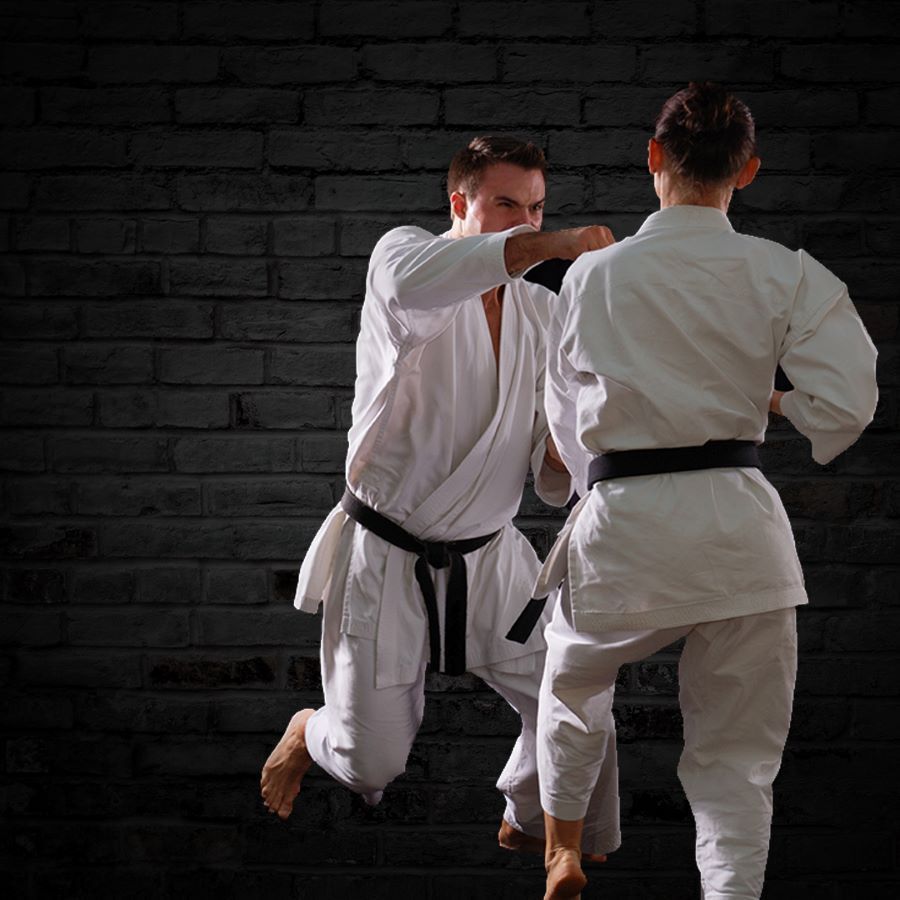
What about the "fringe" skills, the deeper, more esoteric abilities cultivated in dedicated, long-term practice? I’m talking about the high-level martial artist who seems to react to an opponent's intent, moving before the attack is even launched.
It's easy to dismiss these skills as "magical" or "unscientific." The truth is far more exciting. These abilities aren't "fringe"; they are simply the next frontier. They represent a different type of knowledge that science is only just beginning to understand and, more importantly, to measure.
From “Magic” to Measurable: The Science of Anticipation
Let's use that martial arts example.
The ability to react to "intent" isn't precognition. It's a very real, highly trained phenomenon that sports science calls Action Anticipation.
For a novice, a fight is a chaotic series of fast-moving limbs. For a master, it's a flow of information.
This
"fringe"
skill isn't about reading minds; it's about an expert's brain having learned to read the subtle, pre-action cues that a novice’s brain filters out as "noise."
The "Tell"
Researchers have found that these experts are not just reacting faster. They are picking up on microscopic postural cues, a slight weight shift, a tensing of the shoulder, even the facial emotional cues of an opponent, that signal an attack fractions of a second before it begins.
The Insight
This demystifies the skill without diminishing it. It moves it from the realm of the
"supernatural"
to the
"super-trained."
Embodied Knowledge: The Intelligence of the Body
This brings us to a crucial idea for all of us in the wellness and martial arts industries. Why can't you learn this skill from a book?
Because it is not explicit knowledge
(book smarts). It is Tacit Knowledge, an intelligence held and understood by the body itself.
This is the very essence of Embodied Cognition.
Our Western-scientific model has, for centuries, prioritized the brain as the sole container of intelligence. But as practitioners, we know this is false. We know the body holds its own wisdom.
They are cells that fire both when you perform an action
(like a punch) and when you watch someone else perform that same action.
Traditional Training as a System of Intelligence
This is precisely why traditional systems, like the syllabus for a 5th Dan in Shotokai karate, don't just focus on new techniques.
They demand a level of freestyle application and "feeling" that can only be developed through thousands of hours of partner drills, intuitive practice, and kata.
The System
These traditional practices are not just "exercise." They are sophisticated, time-tested systems for cultivating this tacit knowledge.
The Insight
They are, in effect, universities for embodied intelligence.
What we do as martial arts instructors and wellness practitioners isn't "unscientific"; it's a different, and equally valid, domain of knowledge.
The Proof: How Practice Physically Rewires the Brain
So, how do we prove this embodied knowledge is real?
We follow the same path as mindfulness: we look at the brain.
This is the "smoking gun." Neuroscientists studying expert athletes have found that this training physically changes the brain's wiring.
The key lies in a network called the Mirror Neuron System
(MNS).
The Mechanism
Mirror neurons are the brain's "simulator."
In experts, this system is supercharged. It allows them to "simulate" their opponent's actions in real-time, giving them an incredible predictive edge.
The Insight
Just as fMRI scans showed that meditation builds a bigger, better-regulated prefrontal cortex, neuroscience now shows that martial arts practice builds a faster, more efficient mirror neuron network.
The "fringe" skill of reacting to intent is a real, physical change in the brain's wiring.
Our Role as Custodians of the
"Next"
The path from "fringe" to "mainstream" is simply a path of measurement.
In the 1960s, a doctor studying meditation had to do it late at night because it was considered "out there." Today, that same practice is prescribed by doctors and championed by a billion-dollar industry.
The "fringe" skills we cultivate, whether it's the intuitive "read" of a client's energy, the deep kinaesthetic awareness from Qigong, or the martial artist's "reaction to intent" are all on the same journey.
They are not "less than" science.
They are simply ahead of science's current ability to measure them.
For those of us in the wellness and martial arts worlds, this is our validation.
We are not just practitioners; we are the custodians of this tacit knowledge.
We are the laboratories where these human capabilities have been tested and proven for centuries.
As science continues to develop new tools, it will continue to validate the profound, transformative wisdom we've known all along.
About the Author
Gregory (Greg) J. Brady
B.Com., B.A. (Hons in Psych)
Human Services Integration Professional
Martial Arts Practitioner – 50+ years
A senior practitioner blending deep experience in psychology, business and systems thinking. Dedicated to supporting purpose-driven organisations and professionals navigating complex or "wicked" social challenges.
Share Articles and Blogs
Recent Articles and Blogs